
The Rise of Modular Game Economies: A New Frontier in Blockchain Gaming
Introduction to Modular Game Economies
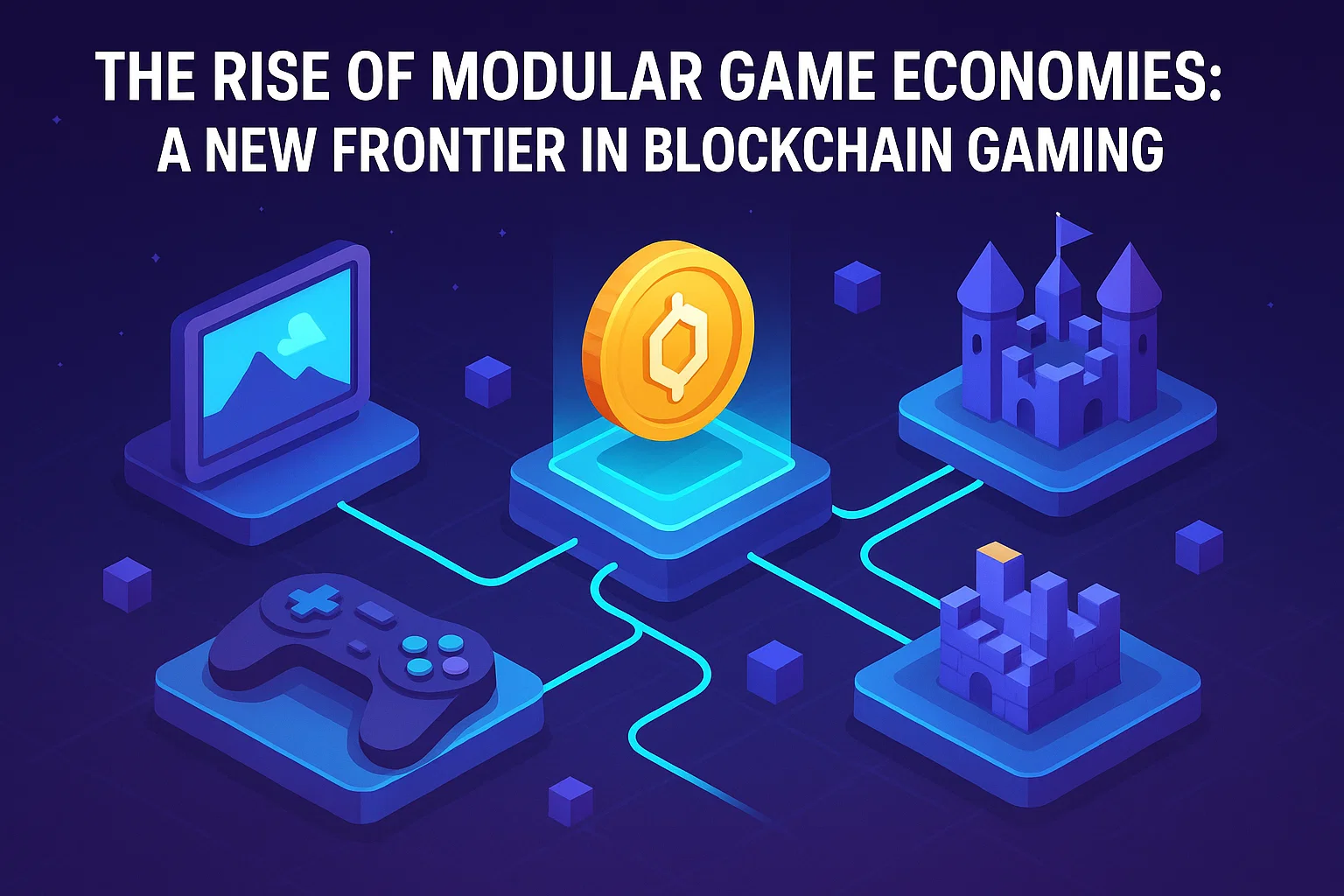
Modular game economies are reshaping the future of blockchain gaming. Instead of isolated in-game systems, developers are building interconnected ecosystems where assets, characters, and currencies can move across multiple titles. As a result, players gain more control, ownership, and long-term value from their in-game activities.
From Play to Earn to Play and Own
Initially, Play to Earn models attracted massive attention by allowing players to earn cryptocurrency through gameplay. However, these systems often depended on constant user growth, which led to instability over time.
In contrast, the Play and Own model emphasizes lasting value. Players now focus on owning meaningful assets rather than extracting short-term rewards. Therefore, this shift lays the foundation for more sustainable game economies.
Why Modular Game Economies Matter
The rise of modular game economies allows assets to exist beyond a single game. Instead of being locked into one experience, items and characters can be reused, upgraded, or transferred across different titles.
Because of this flexibility, players become part of a larger ecosystem rather than a single product. Consequently, engagement increases as assets gain more utility and long-term relevance.
Composability in Modular Game Economies
Composability is a key driver behind modular game economies. Technologies built on Ethereum and Layer 2 solutions enable assets to interact across multiple systems.
For example, players can upgrade items using decentralized tools, rent assets to others, or move them between genres. As a result, gameplay becomes more dynamic and interconnected.
Player Governed Worlds and DAOs
Decentralized governance is also evolving alongside modular systems. Through Decentralized Autonomous Organization structures, players can influence game development and in-game economies.
Instead of passive participation, communities can shape storylines, control factions, and manage resources. Therefore, games begin to function as living, evolving ecosystems.
Global Impact of Modular Game Economies
The growth of modular game economies is having a global impact. In regions like Southeast Asia and Latin America, blockchain gaming is opening new economic opportunities.
While some players benefit financially, the bigger shift is access to ownership and participation. As a result, gaming becomes a platform for creativity, collaboration, and digital empowerment.
Final Thoughts
Overall, modular game economies represent a major evolution in how games are designed and experienced. Instead of isolated systems, future titles will exist within shared ecosystems that grow over time.
Ultimately, blockchain gaming is moving toward a model where players do not just play games—they help shape and own them.
Contact Golden Sea Studios:
- Website: goldenseastudios.com
- Email: info@goldenseastudios.com
- Social Media: @goldenseastudios (Twitter, Instagram, Facebook)
- Telegram: @goldenseastudio
We are available online to assist you with any inquiries or collaborations. Reach out to us through these channels and let’s connect!
