An AI Agent is an AI system that can take a goal, analyze context, choose actions, and use tools to complete part of the work on a human's behalf. The key difference lies in the word action. A typical chatbot mostly answers; an AI Agent can read a request, look up authorized data, update the CRM, create tasks, send a draft for review, and record the outcome.
For small and medium businesses, the value of an AI Agent isn't in owning the latest technology. The value is in maintaining consistent output with a lean team: content still gets prepared, messages still get triaged, prospects still get followed up, and the business owner still sees reports without chasing each person for updates.
How does an AI Agent work?
Think of an AI Agent as a digital team member working within a clearly defined scope. The system receives an input signal, understands what needs to be done, gathers relevant information, performs the permitted steps, and hands off to a human when a situation exceeds its authority.
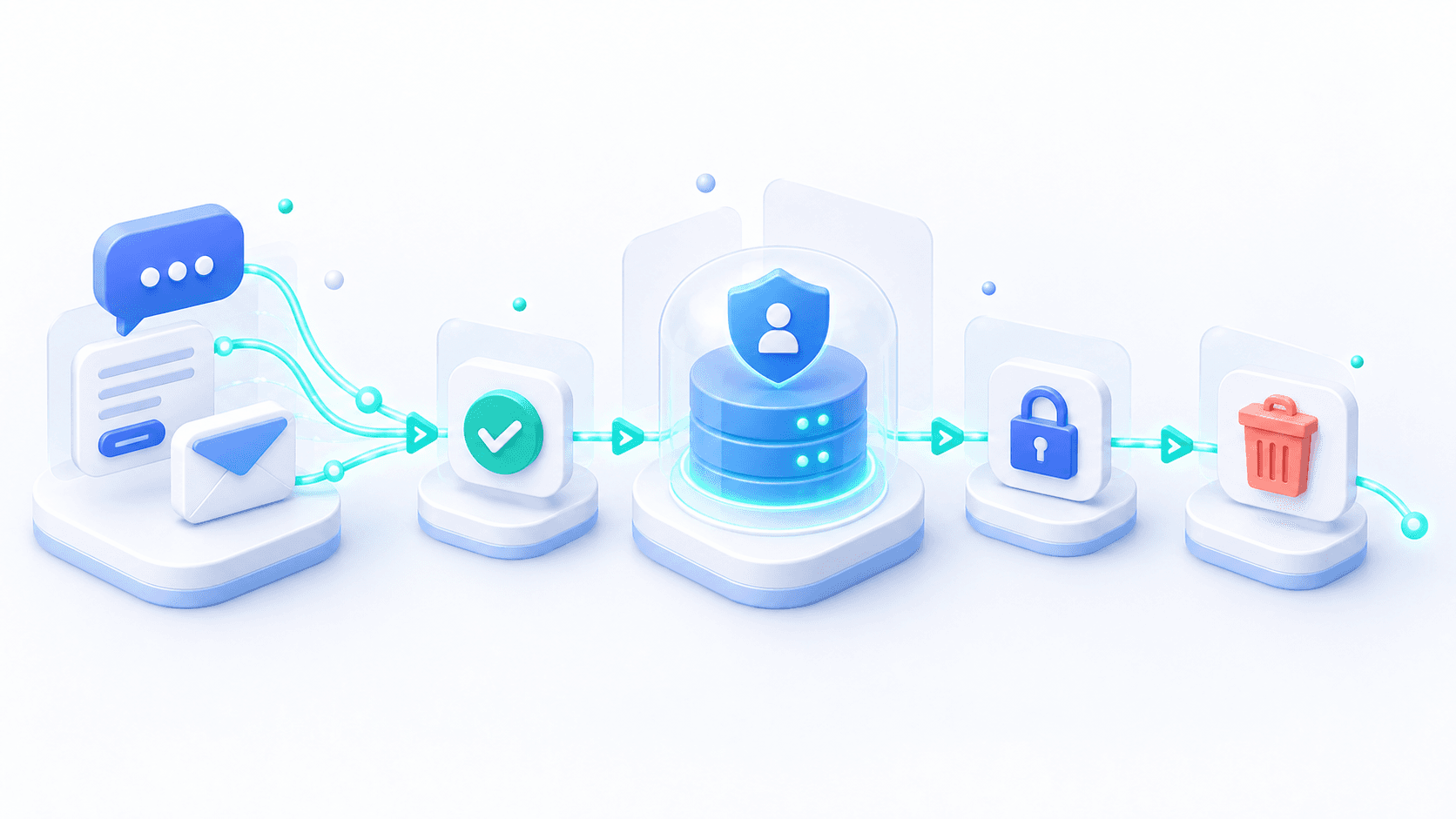
A simple process might start when a customer messages the fan page. The Agent recognizes a pricing inquiry, finds the current price list, drafts a reply, checks the applicable conditions, then either sends it immediately or waits for staff approval. Afterward, it saves the customer's need to the CRM and schedules a reminder if the customer doesn't respond. The entire chain of actions can happen in one flow instead of being scattered across four staff members and three spreadsheets.
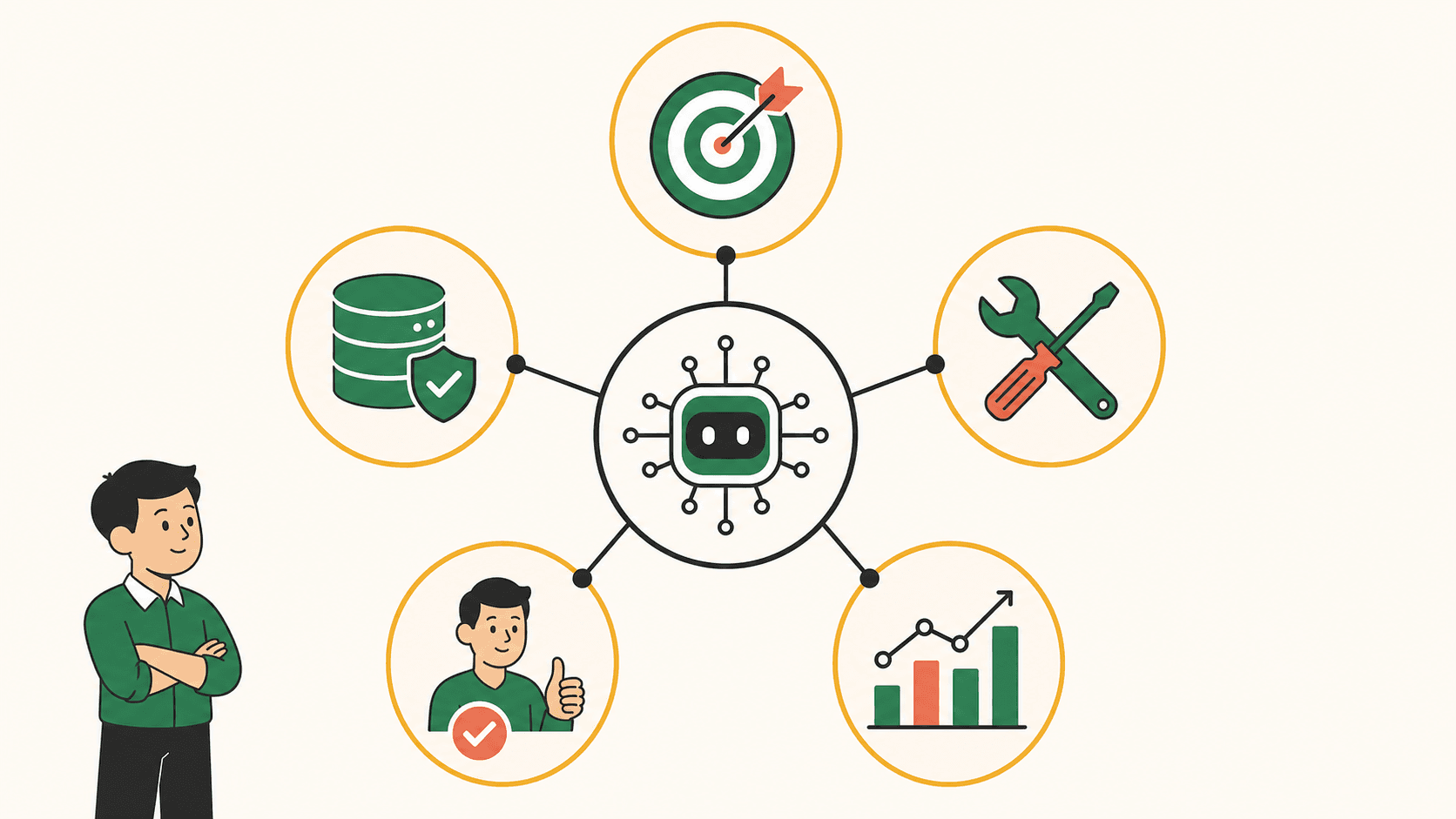
Five core components
- Goal: the outcome to achieve, such as triaging the inbox or preparing the weekly report.
- Context: policies, product data, customer history, and brand rules.
- Tools: CRM, email, calendar, spreadsheets, content repositories, or task management systems.
- Permissions: what it may do on its own, what requires approval, and what is strictly off-limits.
- Measurement: processing time, accuracy, human handoff rate, and business results.
How is an AI Agent different from AI content tools?
Content generation tools typically wait for a prompt and return text or images. An AI Agent operates in chains. It can pull a brief from the content calendar on its own, check brand documents, create a draft, route it to the reviewer, update the status, and move approved posts into the publishing queue. The difference isn't better writing; it's fewer moments when a human has to copy-paste, chase reminders, and check statuses.
This also explains why buying more AI accounts doesn't equal automation. If your data isn't unified, permissions aren't defined, and processes still run on verbal messages, AI only helps individuals work faster. The business still doesn't have an operating system.
What SMEs can delegate to an AI Agent
Content preparation and distribution
An Agent can gather topics, build briefs, create channel-specific drafts, and check the basic requirements before passing them to a reviewer. Once content is approved, the system reformats it for Facebook, LinkedIn, the website, or email. Strategy, brand viewpoints, and final approval remain with humans.
Customer intake and care
AI can handle recurring questions, detect intent, collect necessary information, and prioritize conversations with high purchase potential. Sensitive cases such as complaints, refunds, professional consultations, or policy exceptions must be routed to staff. A good system doesn't try to automate 100%; it knows when to stop.
Data synchronization and task tracking
Instead of staff re-entering information from the inbox into spreadsheets, an Agent can standardize data fields, flag incomplete records, and create follow-up tasks. This category often delivers early wins because the volume of repetition is high, little creativity is required, and correctness is easy to verify.
Reporting and alerts
An Agent can pull data from connected sources, summarize notable changes, and send scheduled reports. However, reports must allow tracing back to the source data. A pretty number that can't explain where it came from doesn't help leaders make better decisions.
What should you not delegate to an AI Agent?
Don't let an Agent commit to prices or policies, make professional diagnoses, handle disputes, or send sensitive information without appropriate control layers in place. An Agent also shouldn't publish opinionated content on its own if the brand lacks clear review standards.
The practical rule: the bigger the consequences, the lower the autonomy. Drafting can be fully automated. Sending an offer to a customer segment may need approval. Changing prices or terms must be decided by someone with the proper authority.
AI supports, humans control
The model that fits most SMEs is human-in-the-loop. AI carries the repetitive work and prepares options; humans set the goals, review exceptions, and remain accountable for outcomes. This approach not only reduces risk but also generates feedback data that makes the Agent increasingly well-fitted to the business.
Microsoft describes a shift from AI assistants, to human–Agent teams, to a model where humans lead and Agents execute. SMEs don't need to jump straight to the final stage. One small process — measured, with a clear owner — is usually worth more than ten flashy demos nobody uses daily.
How to choose your first pilot process
- List the tasks that repeat daily or weekly.
- Pick one with relatively clear inputs and outputs.
- Estimate the current time spent and error rate.
- Set permission boundaries and human handoff points.
- Run a small-scope trial for two to four weeks.
- Compare quality, speed, cost, and the staff experience.
For example, instead of declaring you'll automate all of marketing, start with a process that turns an approved brief into three content versions and a publishing schedule. Once this step is stable, connect performance data so the Agent can suggest improvements.
Three signs your business is ready
First, the team has at least one process documented clearly enough that a new hire could follow it. Second, the necessary data exists in an accessible form with someone responsible for keeping it current. Third, leadership agrees to measure by outputs rather than expecting AI to solve everything on the first try.
If these three aren't in place, the right move isn't buying more tools. Standardize one process, clean up the minimum data sources, and define the business outcome you need to improve.
Conclusion
An AI Agent is not a chatbot with a new name. It's an execution layer connecting your business goals with data, tools, and control rules. For SMEs, the biggest opportunity is running leaner operations while maintaining consistent output.
Golden Sea approaches AI Operations as a hands-on partnership: start from real processes, keep humans at the critical decision points, and measure effectiveness with verifiable results. The next article in this series explains how AI Agents, chatbots, and automation differ.
Read next: The 3 Levels of AI Maturity in SME Businesses · Automate 80%, Route the Remaining 20% to a Human