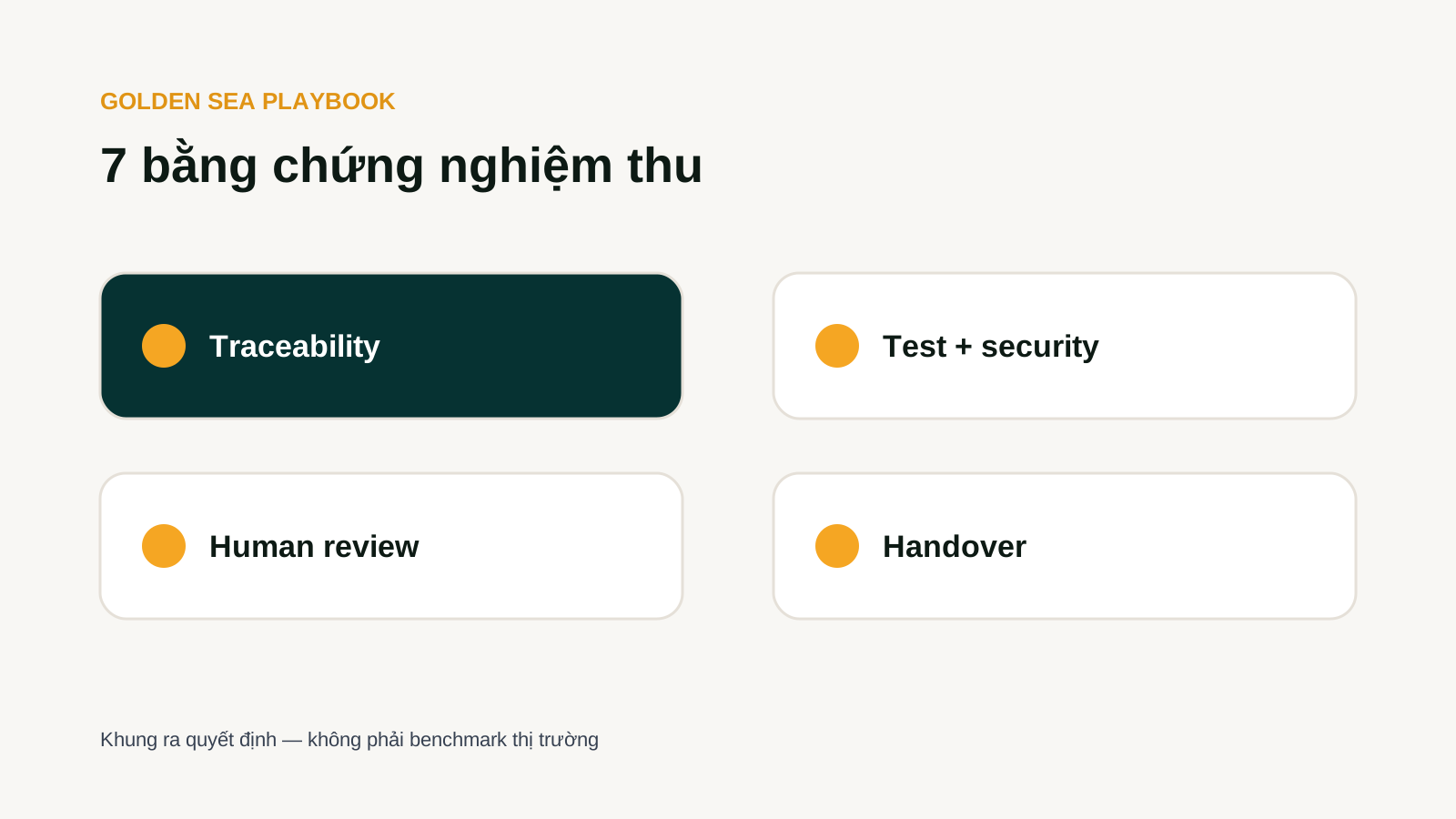

Buyers do not need to ban AI coding agents. They need evidence of quality and accountability: requirement-to-code traceability, automated tests, security checks, human review, performance criteria, operational documentation, and an ownership handover package. A feature demo without these artifacts is not sufficient for acceptance.
Faster code is not easier acceptance
Industry research in 2026 describes engineering work shifting from code authorship toward system design, agent coordination, review, and verification. For outsourcing buyers, the relevant question is not whether AI was used. It is where AI was used, who reviewed the result, and what evidence proves the contracted requirement was met.
Seven required proof points
- Traceability from requirements to pull requests, tests, and releases.
- Repeatable automated tests for primary paths, edge cases, and regression.
- Security review for dependencies, secrets, access, inputs, and sensitive data.
- Human-review records for critical changes.
- Performance results against an agreed workload.
- An operational runbook for deploy, rollback, backup, monitoring, and incidents.
- A handover package covering source, accounts, architecture, dependencies, and IP rights.
Risk-based acceptance
A manual demo proves only that one path worked once. Acceptance evidence must be repeatable by the buyer or a future team. Repositories, cloud accounts, and domains should belong to the buyer rather than an individual supplier account.
How AI-assisted code changes review
Quality principles remain the same, but higher code volume increases the risk of superficial review. Reviewers must validate business assumptions and threat boundaries, not only syntax. Large changes should be split, explained, and backed by tests that demonstrate they can catch a real failure.
Contract controls
- The supplier remains accountable for AI-assisted output.
- Unapproved tools must not receive code, secrets, or customer data.
- Acceptance artifacts are defined before development starts.
- Defect severity and rollback conditions are explicit.
- Critical accounts and repositories belong to the buyer.
Golden Sea approach
Golden Sea separates production speed from release authority. Agents may assist with bounded implementation, tests, and refactoring, while architecture, security boundaries, review, and acceptance remain human-owned. Buyers receive sprint-level artifacts instead of waiting for an end-of-project demo.
Conclusion
AI coding agents change development speed, not the obligation to deliver controllable software. These seven proof points turn quality from a promise into something a buyer can inspect.
How to run an acceptance session
The supplier should share release notes, acceptance criteria, and evidence links before the meeting. The buyer should sample requirements and trace each one to a pull request, test, and deployed build. Error paths should be exercised alongside the happy path. Every issue needs severity, ownership, and a due date; missing evidence remains an open acceptance item rather than a promise to complete later.
After the demonstration, the buyer should access staging or run the build using buyer-owned credentials. Someone outside the delivery team should follow the runbook for a basic operational task. If the original developer must remain present for every deploy or diagnosis, the handover risk is unresolved.
Scale evidence with risk
A small MVP can use lightweight artifacts, but it still needs acceptance tests, a repository, deployment instructions, and known limitations. Systems handling customer records or payments need a threat model, access controls, backups, and a recovery test. Longer engagements benefit from random sprint-level audits so AI-related technical debt is detected before final handover.