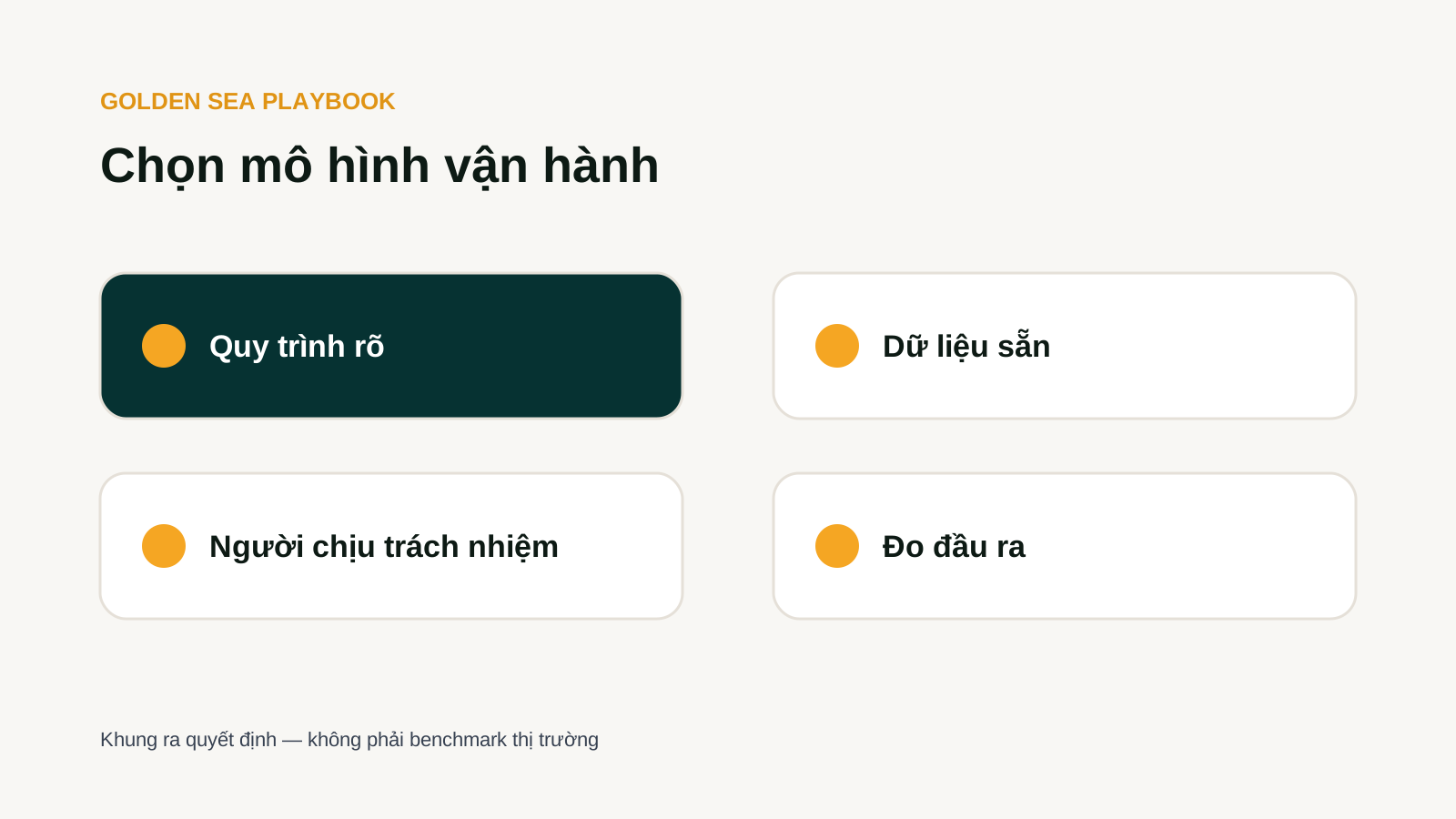

Build a DIY stack when the workflow is small, an internal owner has technical capacity, and the business accepts ongoing maintenance. Choose managed AI Operations when channels must work together, data needs synchronization, output must remain consistent, and one party must own reliability. The real decision is not app pricing; it is the total cost of keeping the system useful for six months.
Why this decision matters now
The market is moving from isolated chatbots toward agents that participate in marketing, sales, scheduling, and operations. Yet recent small-business discussions still center on practical work: recurring questions, appointment reminders, content updates, and lead follow-up. These discussions are qualitative signals, not market-size evidence, but they reveal the gap between impressive demos and durable operations.
DIY stack vs managed operations
A tool can generate content without knowing what was approved. A chatbot can answer quickly without knowing which pricing policy is current. A workflow can move data without owning an API failure. Value appears only when process, access, logs, checkpoints, and ownership are designed together.
Calculate total cost
Include software, integration, data cleanup, monitoring, change management, and failure recovery. A collection of subscriptions is not an operating system. Managed service earns its fee when it reduces coordination cost and turns outputs into inspectable service levels.
Decision checklist
- Name one business output to improve.
- Map inputs, steps, approvals, and owners.
- Define who handles failures and out-of-scope answers.
- Estimate monthly internal maintenance time.
- Require logs, handover documentation, and data ownership from any provider.
Where Golden Sea fits
Golden Sea helps SMEs connect content, inbox, data, follow-up, and reporting without hiring a full automation team. The approach starts with an audit and one valuable workflow, adds human checkpoints, and expands only after the output is measurable.
Risks to lock down
- Business-owned accounts and data
- Explicit no-autonomy cases
- Traceable inputs, outputs, versions, and approvals
- A change process for policies and APIs
- Handover documentation
Conclusion
Choose based on complexity, coordination cost, and output accountability. DIY is sensible for a small workflow with a capable owner. Managed AI Operations is more practical when several modules must behave as one reliable system.
When DIY is the better choice
DIY is sensible when the workflow has few steps, uses low-risk data, changes infrequently, and has a named internal owner. Examples include moving form submissions into a shared table, sending internal alerts, or preparing a draft report. Start with one metric and preserve a manual fallback. Do not give an agent authority over pricing, customer promises, or sensitive records before access rules and logs exist.
Five cost categories
Separate software subscriptions, integration work, data preparation, monthly operations, and failure risk. The cheapest app combination can become expensive when staff repeatedly reconcile duplicates, repair broken APIs, or investigate missing leads. A managed provider should make these responsibilities visible and measurable rather than hiding them behind a single interface.
Contract controls
Business accounts and data should remain under the client’s ownership. The agreement should list decisions the agent cannot make, define the logs required for traceability, explain how policy and API changes are handled, and require handover documentation. These controls prevent a useful automation from becoming dependent on one supplier or one employee.