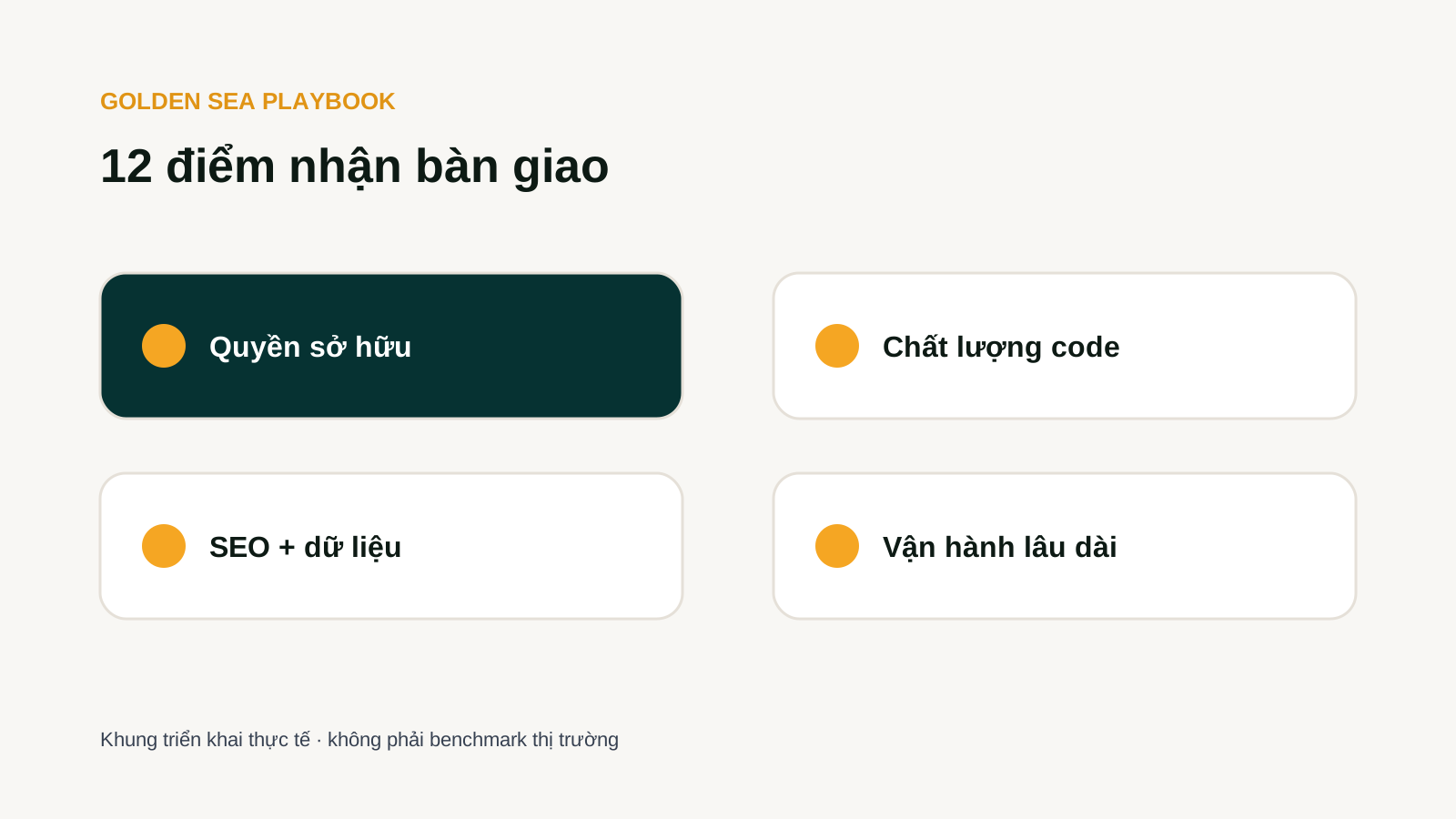

Accept an AI-built website only after verifying ownership, reproducible deployment, code quality, security, SEO, data flows, and operating documentation. A polished demo is not yet a durable digital asset. If the domain, repository, analytics, hosting, or lead data remains controlled by an individual supplier account, the business does not fully own the website.
Why fast delivery still needs rigorous acceptance
AI builders accelerate interface and code production, but they do not automatically solve maintainability, licensing, ownership, or incident responsibility. Problems appear later when the business adds services, changes forms, introduces bilingual SEO, connects a CRM, or asks a new team to take over.
The 12 checks
- Put domain registration and DNS under a business-controlled account.
- Transfer the repository with history, administrator rights, and no embedded secrets.
- Document licenses for packages, fonts, icons, templates, and photography.
- Prove that a clean machine can install dependencies and complete the production build.
- Transfer hosting ownership and define production, staging, and preview access.
- Test forms, notifications, storage, spam handling, and lead ownership.
- Transfer Analytics, Tag Manager, and Search Console with meaningful conversion events.
- Validate titles, canonicals, sitemap, robots, structured data, headings, and internal links.
- Test performance and task completion on a real mid-range mobile device.
- Check keyboard navigation, contrast, labels, errors, and missing-data states.
- Review dependencies, input handling, privileges, rate limits, and update ownership.
- Receive a runbook covering deploy, rollback, backup, restore, renewal, and supplier exit.
Evidence beats a demo
Request business-owned accounts, a successful clean build, test output, a dependency list, analytics access, a source register, and a recovery exercise. These artifacts make completion inspectable and help a future team continue the work.
SEO and bilingual release checks
Important pages must be reachable through normal links. Language versions need separate server-rendered URLs, matching canonicals and hreflang, correct inLanguage values, and sitemap inclusion. Cookie-only language switching weakens both user access and crawler clarity.
How Golden Sea approaches handover
Golden Sea treats a website as an operating system rather than a gallery of screens. Ownership, environments, measurement, documentation, and acceptance criteria are defined before delivery. AI can speed up production, while accountable people retain responsibility for architecture, security, SEO, and release decisions.
Conclusion
A rigorous checklist protects both buyer and development team. Buyers know what they own, and suppliers avoid subjective arguments about completion. Accept evidence that can be opened, executed, and tested, not only a smooth presentation.