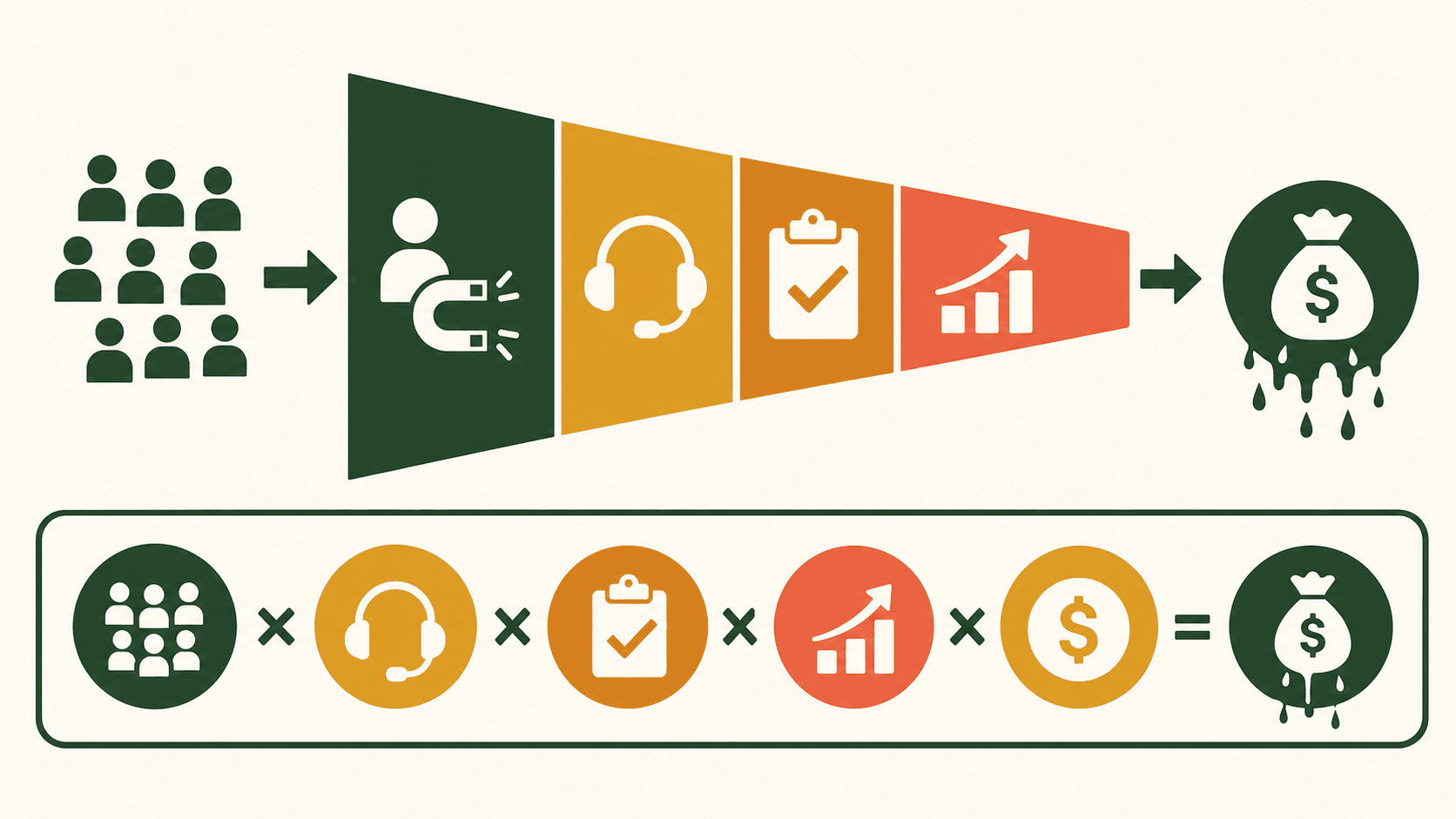

Short answer: Lead leakage is hard to see but measurable with your own data. A practical formula, follow-up workflow and safety controls. Recent Reddit discussions suggest operators care more about repetitive work, reliability and implementation than technology labels. Reddit is qualitative research, not a representative SME sample, so these concerns frame questions rather than market statistics.
Guiding principle: start with observable leakage, design human control and expand only when evidence shows the workflow outperforms the old process.
What is lead leakage?
Lead leakage occurs when a qualified opportunity does not receive the right next step at the right time. The baseline should separate volume, waiting time, error rate and handoff friction so the team can see what automation actually changes.
The risk to confront
It does not appear as an invoice, so it is easily underestimated. The risk is using a vague metric and mistaking general pain for the one leak that matters most.
Recommended action
Define statuses and follow-up deadlines for each lead type. Capture the last 30 days with one definition, separate measured facts from assumptions, and only approve a pilot when both sides are reading the same table.
Use your own funnel
You do not need generic benchmarks; use lead volume, qualification, follow-up completion and average contribution. The baseline should separate volume, waiting time, error rate and handoff friction so the team can see what automation actually changes.
The risk to confront
Borrowed benchmarks can produce attractive but inaccurate forecasts. The risk is using a vague metric and mistaking general pain for the one leak that matters most.
Recommended action
Separate measured facts, assumptions and ranges. Capture the last 30 days with one definition, separate measured facts from assumptions, and only approve a pilot when both sides are reading the same table.
A conservative leakage formula
Estimate leakage as qualified leads without follow-up multiplied by observed conversion and average contribution. The baseline should separate volume, waiting time, error rate and handoff friction so the team can see what automation actually changes.
The risk to confront
The formula does not claim every lead would buy; it creates a decision range. The risk is using a vague metric and mistaking general pain for the one leak that matters most.
Recommended action
Run conservative, base and upside scenarios. Capture the last 30 days with one definition, separate measured facts from assumptions, and only approve a pilot when both sides are reading the same table.
A safe follow-up workflow
Trigger from status, check consent and history, choose approved messaging, send, log and stop on response. The baseline should separate volume, waiting time, error rate and handoff friction so the team can see what automation actually changes.
The risk to confront
Sequences without stop conditions create spam. The risk is using a vague metric and mistaking general pain for the one leak that matters most.
Recommended action
Use frequency caps, quiet hours and unsubscribe handling. Capture the last 30 days with one definition, separate measured facts from assumptions, and only approve a pilot when both sides are reading the same table.
Where AI should assist
AI can summarize context, suggest next best action and personalize within boundaries. The baseline should separate volume, waiting time, error rate and handoff friction so the team can see what automation actually changes.
The risk to confront
Letting AI invent offers or commitments increases commercial risk. The risk is using a vague metric and mistaking general pain for the one leak that matters most.
Recommended action
Lock policy and route sensitive cases to an authorized person. Capture the last 30 days with one definition, separate measured facts from assumptions, and only approve a pilot when both sides are reading the same table.
The dashboard must drive action
Track overdue follow-up, response, booking, conversion and loss reasons. The baseline should separate volume, waiting time, error rate and handoff friction so the team can see what automation actually changes.
The risk to confront
A month-end dashboard cannot rescue a lead going cold today. The risk is using a vague metric and mistaking general pain for the one leak that matters most.
Recommended action
Create SLA-based queues and owner alerts. Capture the last 30 days with one definition, separate measured facts from assumptions, and only approve a pilot when both sides are reading the same table.
Decision checklist
- Does the problem occur frequently enough and cause visible loss?
- Are inputs, outputs, owners and exceptions documented?
- Is there a system of record and least-privilege access?
- Are human gates, logs and rollback defined?
- Will baseline and pilot results use the same measurement?
Conclusion
The Real Cost of a Lead Forgotten After the First Inbox becomes an advantage only when the business has discipline around data, ownership and measurement. The better starting question is not which AI to buy, but which workflow deserves redesign first. Golden Sea approaches Automation Operations as audit, standardize, pilot, measure and scale—with AI assisting and humans retaining authority over consequential decisions.
Continue with: Businesses Do Not Need an AI Agent — They Need Less Leakage · Why AI Automation Creates More Work Instead of Less · Is AI Automation Really Worth the Cost for an SME?