Blockchain & Web3
MoneyFi — Cross-Chain Auto-Earn
Discipline
DeFi / Yield Automation
Auto-earn stablecoins across 10+ chains. SMF mechanism distributes to top pools. Avg APY 17.73%.
The brief
What it is and how it was built.
Earning yield on stablecoins across many chains is real work. Finding the best pools on Ethereum, Arbitrum, Optimism, Base and a dozen other chains means watching rates all the time, counting gas costs and moving funds around, and even experienced DeFi users struggle to keep up.
MoneyFi does that work for the user. You deposit USDC into one vault. The SMF (Smart Money Flow) mechanism, written in Rust and Solidity with Move contracts for some chains, keeps comparing yields across the connected protocols and moves deposits to the pools paying the most at that moment.
There is no lock-up. Most yield products ask you to commit funds for a fixed period; MoneyFi lets you deposit and withdraw at any time. Locked positions usually earn a bit more, but users who might need their money back are not penalised for joining.
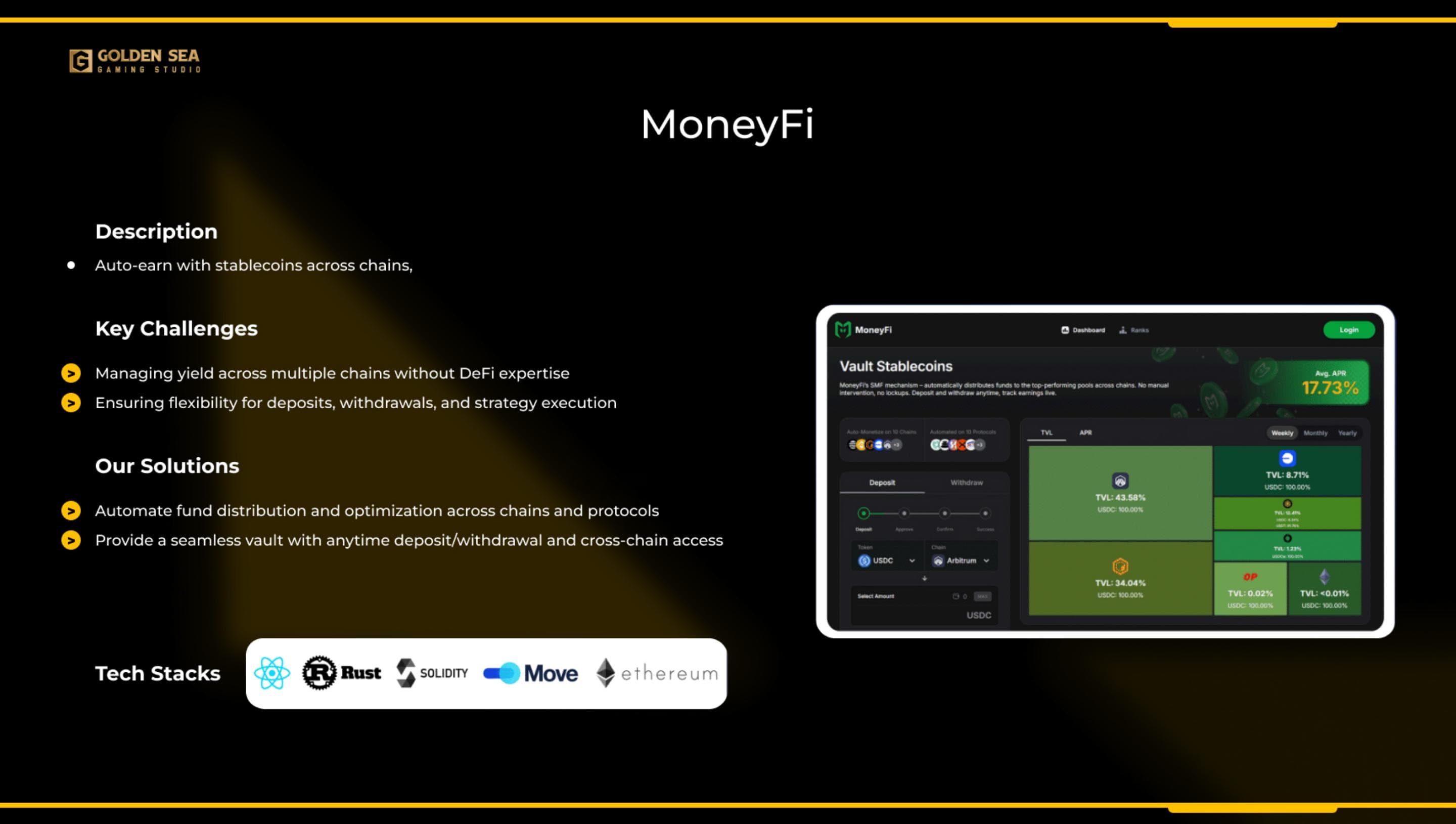
Since launch the platform has recorded an average APY of 17.73% on stablecoin deposits, by catching yield differences between chains that are hard to chase by hand. The live dashboard shows each chain's TVL, how deposits are split and the current APY, so users can always see where their money is.
Scope delivered
What we delivered.
- 01Moves funds to the best-paying pools across 10+ chains
- 02Average APY of 17.73% on stablecoin deposits since launch
- 03SMF (Smart Money Flow) allocation mechanism
- 04Deposit and withdraw any time, with no lock-up
- 05USDC on Arbitrum, Ethereum and more
- 06Live dashboard with TVL and APY for each chain
Category
Blockchain & Web3
Technology
Rust · Solidity · Move · Ethereum · React JS · Web3.js
Studio
Golden Sea Studios
Ho Chi Minh City, Vietnam
This project proves
App & Web DevelopmentA cross-chain auto-earn protocol across 10+ networks, with the hard part in capital-routing architecture.
Have a similar challenge?