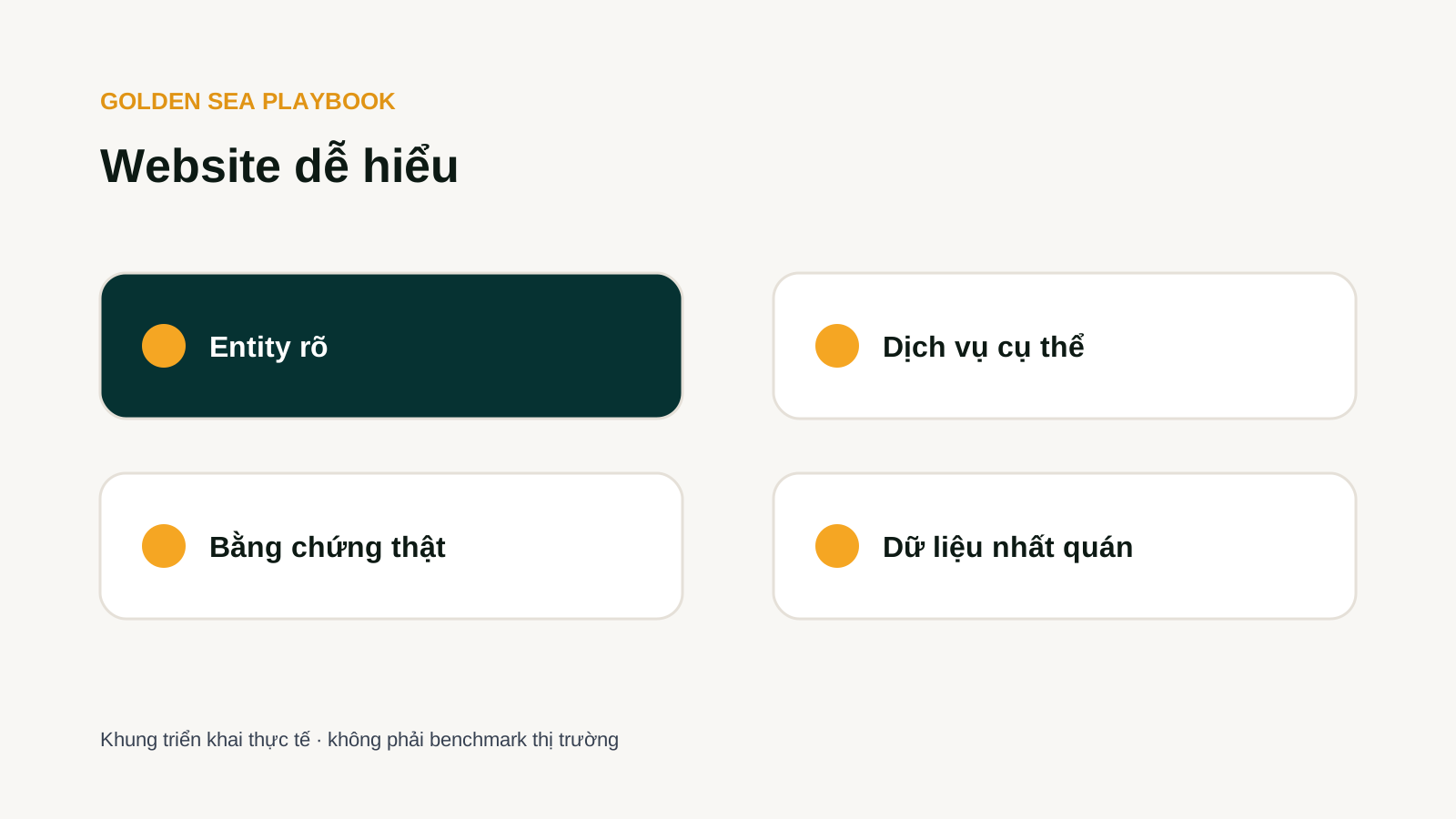

A service website becomes understandable to Google, ChatGPT, and AI agents when it consistently explains four things: who the business is, what it provides, whom and where it serves, and what evidence supports its claims. There is no GEO shortcut that replaces real information. Strong structure lets customers, crawlers, and AI systems extract answers without guessing.
Start with the questions the site must answer
Many service sites scatter their answers. The homepage stays vague, service pages repeat slogans, the about page lacks accountable people, and contact forms provide no response expectation. Ambiguity makes buying harder and weakens entity understanding.
Build four information layers
- Business entity: consistent brand name, legal identity where relevant, address, contact details, service area, language, hours, and official profiles.
- Service entities: a dedicated URL for each important service with audience, problem, deliverables, scope, process, inputs, exclusions, and next step.
- Evidence: authoritative external sources, accurately scoped experience, licensed real images, quality methods, and verified case studies.
- Machine-readable structure: semantic HTML and matching Organization, LocalBusiness, Service, Article, and BreadcrumbList data where appropriate.
Ten fields for every priority service
- Consistent service name
- Problem or job to be done
- Suitable and unsuitable buyers
- Concrete deliverables
- Included and excluded scope
- Implementation process and checkpoints
- Required inputs and access
- Timing and pricing principles
- Evidence, sources, and accountable author
- Call to action and expected response
Avoid scaled local pages
Do not create dozens of near-identical pages that only replace a city or industry name. A local page needs real local substance: service coverage, onsite process, sector context, evidence, photography, and questions specific to that market.
Bilingual architecture
Each language needs its own server-rendered URL, metadata, complete content, locale-correct internal links, canonical, hreflang, inLanguage, and sitemap entry. Cookie-only translation creates avoidable ambiguity for both users and crawlers.
Audit the site in one hour
Test three buyer queries, reconcile entity data, review service outputs and calls to action, flag unsupported claims, validate structured data, inspect the sitemap, and read each page on mobile as a first-time customer.
Where Golden Sea fits
Golden Sea combines website development, content architecture, and AI automation so discovery connects to an owned lead process. The work is useful when a business needs a redesign, service-data cleanup, or integrations between forms, CRM, booking, and reporting.
Conclusion
A website that is easy for AI to understand must first be easy for people to understand. Clarify entities, services, evidence, and data, then use structured data and technical SEO to express them consistently.