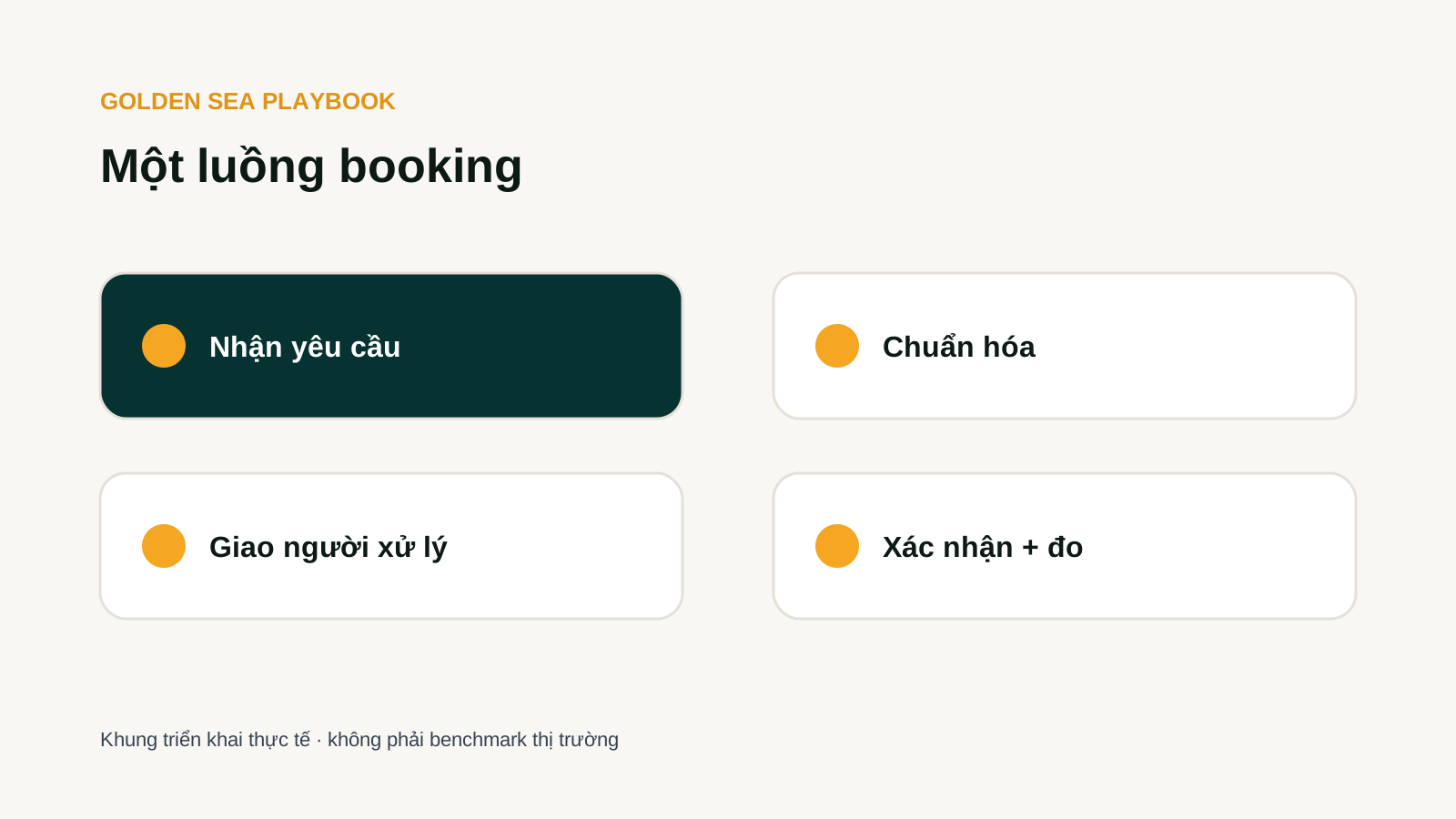

Vung Tau service businesses do not need to start with an all-purpose AI agent. Start with one booking ID, one customer record, one current status, and one accountable owner. Website, Zalo, and calendar may remain separate touchpoints, while their data enters one operating flow so staff do not retype information and customers do not receive conflicting answers.
The problem is not channel count
Customers may discover the business on Google, submit a website form, ask on Zalo, and call to confirm. Failure begins when each channel creates a separate record and nobody knows which state is current.
Define the booking record
Use a unique ID, creation time, source, customer, contact channel, service, preferred time, party size, notes, owner, and status. Collect only enough information for the first decision, and protect sensitive data according to a documented purpose.
Use explicit states
Keep the state model short: new, needs information, checking, waiting for customer, confirmed, completed, cancelled, or no-show. Every state needs an owner and next action.
Assign each channel a role
- The website creates a request and measures meaningful conversion events.
- Zalo supports confirmation and reminders but is not the only database.
- The central calendar accepts only qualified, owned bookings.
- Notifications route work by service, urgency, branch, and responsibility.
Use AI only for inspectable work
AI may summarize conversations, extract service intent, flag missing fields, and draft responses. It should not silently change pricing, promise availability, or resolve sensitive complaints. Suggestions need source context, review flags, and traceable logs.
Build the MVP progressively
- Select one service and operating team.
- Agree on fields and statuses.
- Connect the website form to a central table or CRM.
- Add owned alerts and an internal response target.
- Connect the calendar after data stabilizes.
- Add official Zalo/API integration where permissions allow.
- Run a short parallel period before retiring the old method.
Test operational exceptions
Test duplicate contacts, two employees holding one slot, rescheduling, temporary API failure, policy changes, deletion requests, and shift handover. Acceptance must cover recovery, not only the happy path.
Measure the first month
Track requests with an owner, first-response time, duplicate records, re-entry, no-shows, and manual corrections. Use the business's own baseline rather than invented market benchmarks.
Where Golden Sea fits
Golden Sea audits the current flow, defines data and ownership, then connects website, Zalo, calendar, CRM, or a custom app according to real API access. Human checkpoints remain around pricing, availability exceptions, and sensitive communication.
Conclusion
A strong booking workflow does not force customers to abandon familiar channels. It makes every channel refer to one source of truth and one accountable process.