A service-business website in Vung Tau generates leads when it quickly explains what the company solves, where it operates, and what the visitor should do next. Attractive visuals without local proof, clear calls to action, speed, tracking, and follow-up create only an online brochure. Design should begin with search intent and the lead journey.
Local does not mean repeating Vung Tau
Local buyers search with specific intent: service plus area, pricing, response time, booking, or nearby support. Google continues to emphasize accessible, useful content and clear business information. AI Search does not replace these foundations; primary content must still be indexable and consistent.
To hold these criteria against something concrete, the website template library opens on a phone right now, and the website design price list sets out each package with its delivery time.
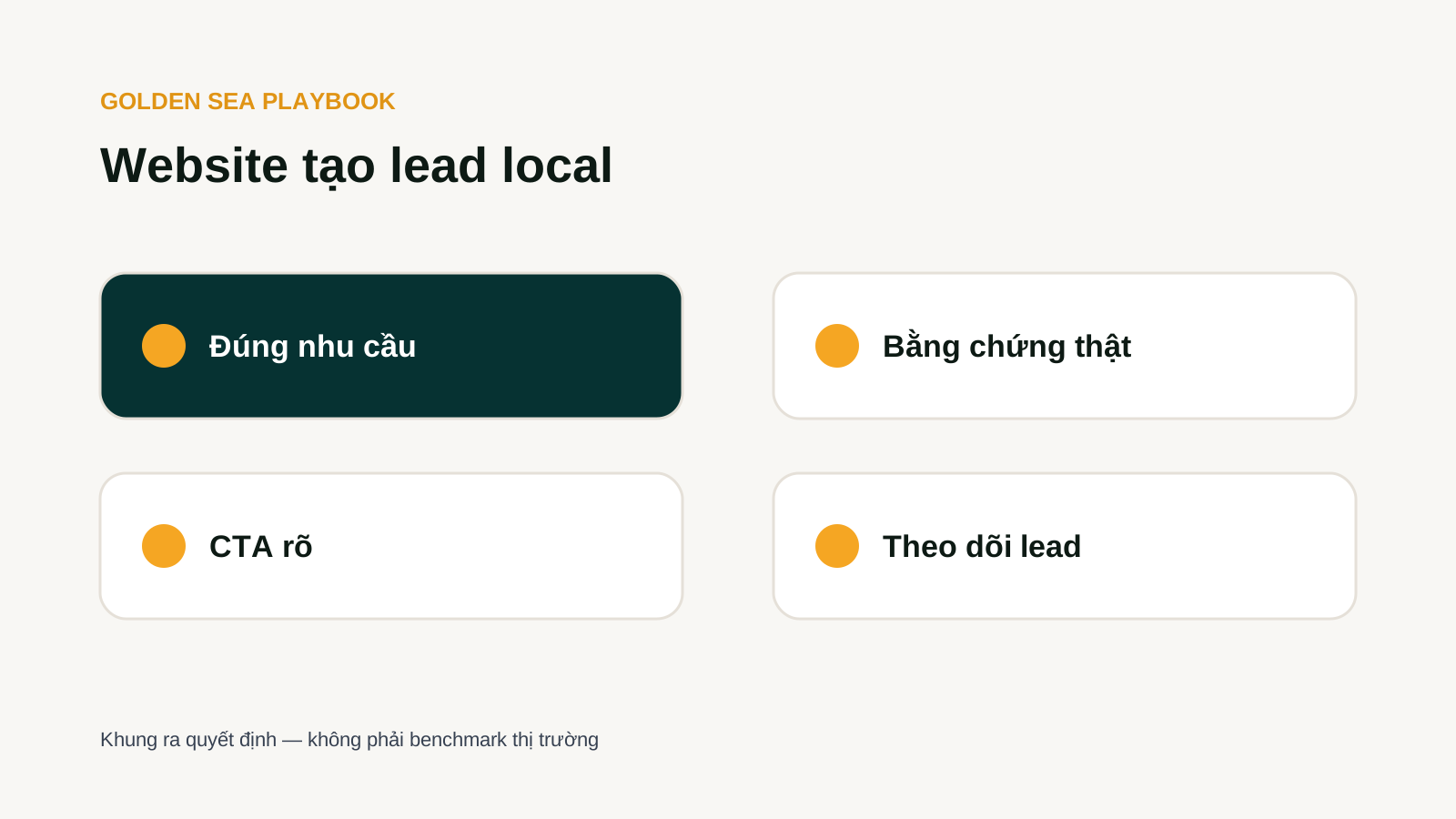
Seven lead-generation components
- A dedicated page for each priority service.
- Natural service-area information and consistent contact details.
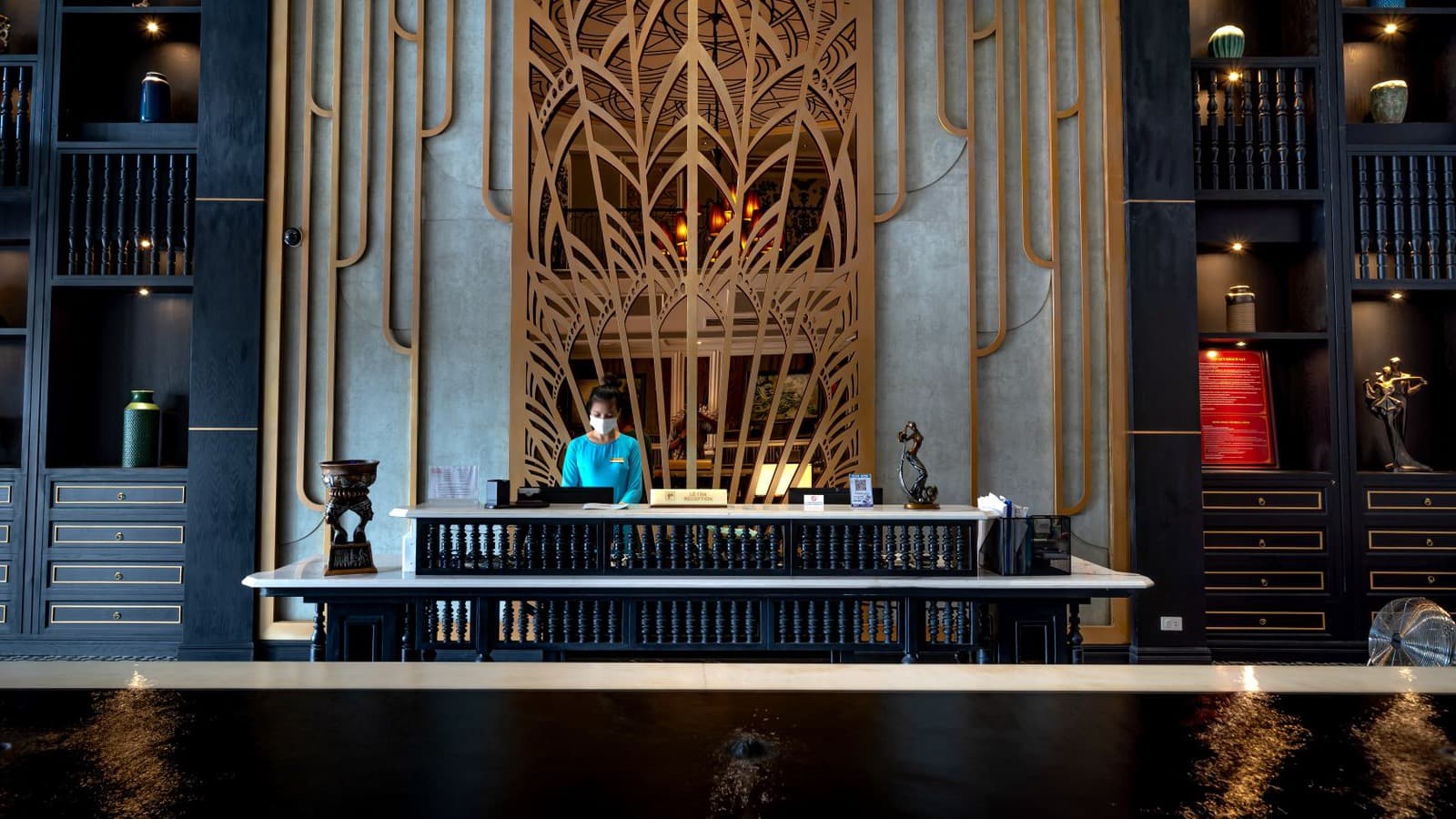
- Real proof such as process, team, certifications, or approved work.
- Calls to action for different readiness levels.
- Short forms with a stated response time.
- Event and source tracking for calls and forms.
- A follow-up process after submission.
Page structure
The page should answer what the company does, when the service is needed, what the process includes, why the visitor should trust it, and what low-risk next step is available.
Build SEO and GEO into design
URL architecture, headings, internal links, metadata, speed, imagery, and server rendering should be decided before launch. GEO requires answer-first passages, clear definitions, reliable sources, buyer-relevant FAQs, and consistent entity information rather than AI-written filler.
Bilingual release
Businesses serving international visitors or partners should use a separate `/en/...` URL. Canonical tags, hreflang, schema language, and sitemap entries must expose both versions; cookie-only language switching is insufficient.
Golden Sea approach
Golden Sea starts with priority services, customer segments, and conversion paths before visual design. Scope can include bilingual delivery, local SEO foundations, schema, tracking, forms, and Zalo or CRM integration where operations justify it.
Conclusion
A strong local website helps the right visitor understand, trust, and act. For Vung Tau service businesses, local relevance, credible proof, and response capability matter more than decorative effects.
Common failures
Many local websites open with a generic slogan, provide only a broad Contact button, and send forms into an inbox with no owner. Visitors then struggle to understand the exact service, the service area, the next step, or the expected response time. A conversion path must continue after the form through alerts, ownership, and a response target.
Measure the first 90 days
Do not judge the site only by total traffic. Track indexed service pages, early impressions for local queries, call and Zalo clicks, valid forms, response time, and the percentage of leads actually handled. If visitors arrive but do not act, revisit the proposition and calls to action. If forms arrive but do not become conversations, inspect lead quality and follow-up operations.
Record a baseline before migration, including existing calls, load speed, impression-bearing URLs, and shared links. Redirects, analytics, Search Console, and sitemap verification belong in the release plan. Losing existing signals during a redesign can erase value the business has already accumulated.
Before requesting a quote
Choose up to three priority services, gather approved real-world proof, assign owners for calls and forms, and state whether English, booking, payment, CRM, or maintenance is required. Ask suppliers to separate design, development, content, tracking, and ongoing support so proposals can be compared on scope and outcomes.