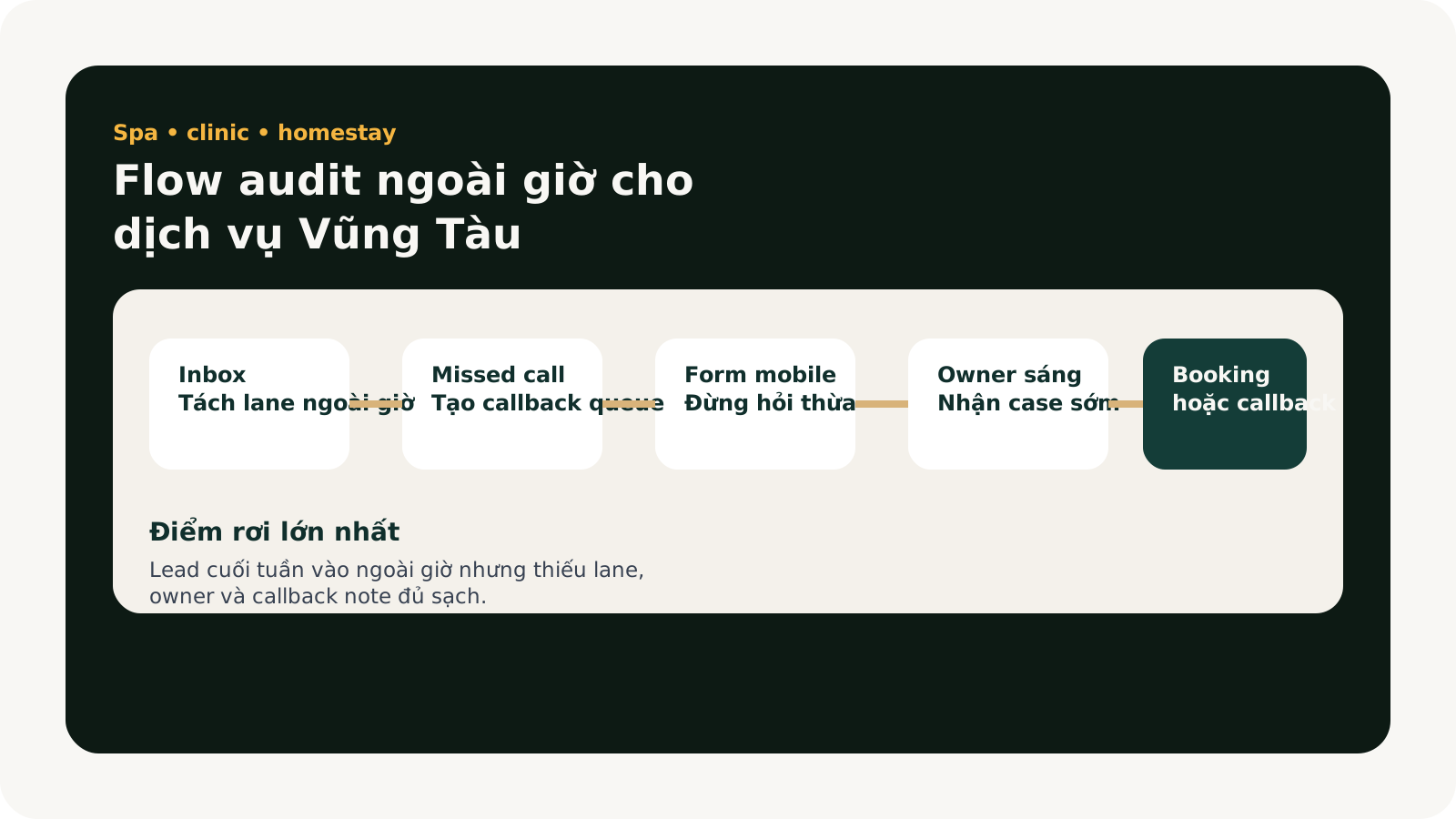

Short answer: For many service businesses in Vung Tau, leads do not disappear because the ad was weak. They disappear after 6 p.m., when guests message, call, or try to hold a weekend slot and nobody clearly owns the queue. A proper after-hours booking audit usually exposes five failures: fragmented inputs, first replies that do not create a next step, unclear morning ownership, context-poor forms, and no prioritization for near-term demand.
Why Vung Tau deserves a local after-hours booking piece
This is not a location label for SEO decoration. Vung Tau has a real weekend-service rhythm. Spa, clinic, and short-stay businesses often receive intent-rich messages after working hours, near departure times, or right before the weekend. In smaller businesses, that is when queue ownership problems become visible.
Broader digital-tourism trends still matter, but the practical operating pain here is speed-to-lead and callback discipline. That is why this article should focus on flow auditing instead of generic “AI for tourism” language.
Five common lead-leak points after hours
| Leak point | Signal | Typical outcome |
|---|---|---|
| No after-hours lane in the inbox | Messages land in the same queue as low-value support chatter | Hot leads receive slow or no response |
| Missed calls do not create cases | Missed calls stay inside personal phones or the switchboard | No one knows who should call back first in the morning |
| Booking forms lack context | No desired date, headcount, service type, or time preference | The team loses momentum by asking from scratch |
| No morning owner | Everyone assumes somebody else picked up the case | Callbacks happen late or twice |
| No urgency rule for near-term demand | This weekend demand sits beside vague future inquiries | Bookings leak to faster competitors |
How to audit the flow
- Map every post-6 p.m. source: Zalo, Facebook, web form, missed calls, OTA, direct inbox.
- Check whether the first response creates a real next step or only acknowledges receipt.
- See who owns those cases the next morning and in what order.
- Find where customers must repeat basic information.
- Count late callbacks, duplicate callbacks, and cases with no logged outcome.
A seven-day audit example
One week of after-hours data is often enough to reveal the pattern. Count how many missed calls were not returned in the first 30 minutes of the next shift, how many inbox threads required customers to repeat their date or service because the form lacked context, and how many this-weekend requests were handled like ordinary low-priority inquiries. Those three numbers already point to major revenue leakage.
For service businesses in Vung Tau, the hard part is not always lead volume. The pain often comes from compressed time windows where the person on duty cannot respond, collect booking context, and leave a clean callback queue for the morning team at the same time. The answer is flow design and handoff discipline, not simply telling staff to reply faster.
Three small changes that usually create outsized gains
- Create a near-term CTA lane: demand within the next 24 to 48 hours should not sit beside vague future interest.
- Standardize callback notes: each missed call should capture callback reason, urgency, and next owner.
- Simplify the mobile form: ask only what is needed to secure the next step, not everything in the first interaction.
The weekly numbers worth tracking after the audit
- The percentage of missed calls returned within the first 30 minutes of the next shift.
- The percentage of after-hours leads with a clear owner the next day.
- The percentage of weekend inquiries that turn into a booking or confirmed callback.
- The number of cases where customers repeat date, time, or service details.
These metrics are small enough for a lightweight sheet or dashboard, but close enough to revenue that the team can see whether the redesigned flow actually works.
Read next: 15-minute missed-call follow-up playbook · AI receptionist for SMEs · Minimum architecture for automated lead classification