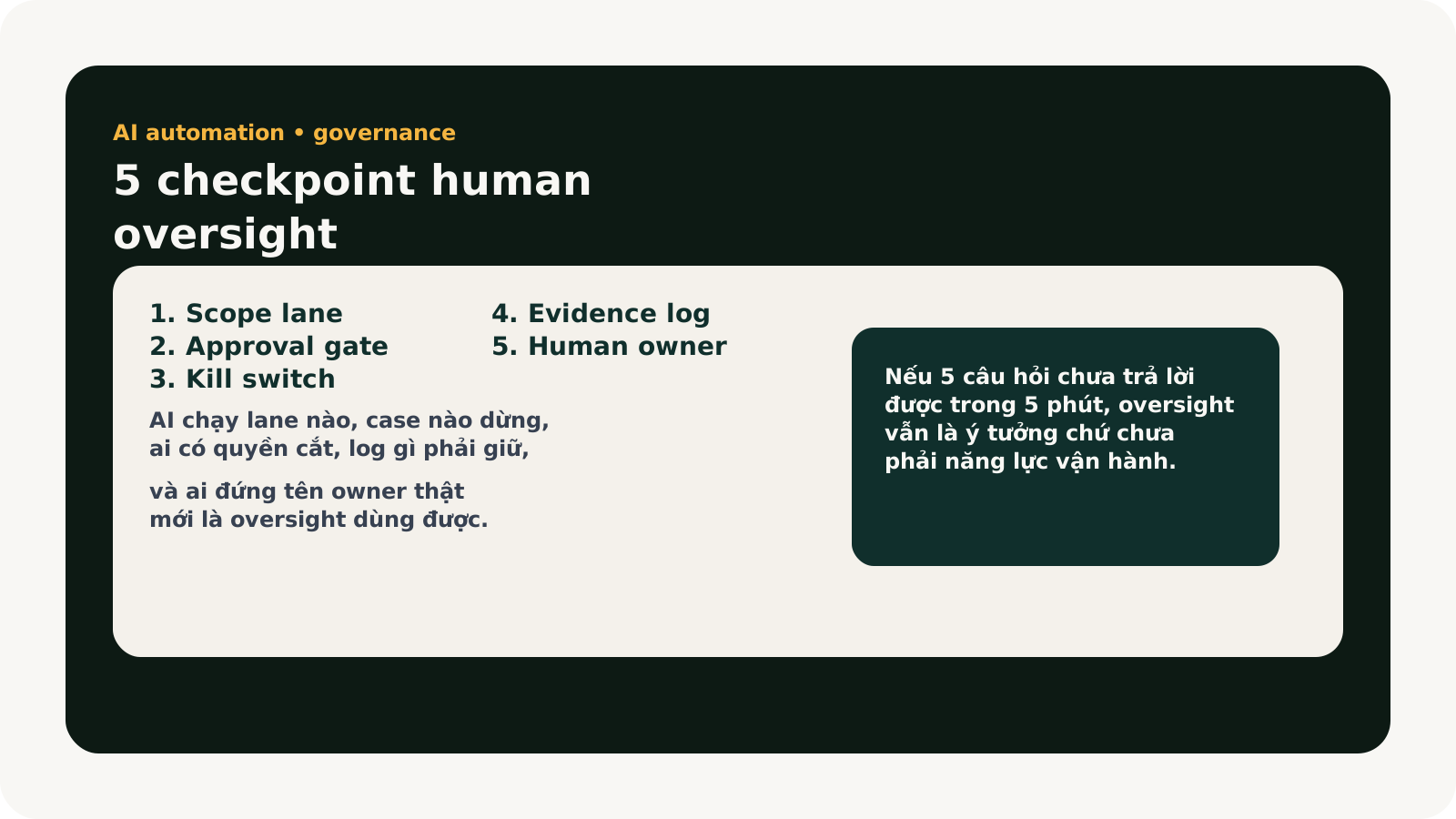
Short answer: As August 2026 puts more attention on human oversight, SMEs do not need compliance theater first. They need five operating checkpoints they can actually inspect: which lanes AI may run autonomously, where approval is mandatory, who can stop the system, which logs must be preserved, and which cases must always move to a human owner.
Why human oversight is suddenly a hotter topic
Two signals are converging. First, the EU AI Act keeps human oversight explicit for high-risk systems and for deployer responsibilities. Second, frontier labs such as OpenAI are publishing more openly about long-running model failures, trajectory-level monitoring, and the need to give users more visibility and control.
That changes the buyer conversation. Teams are now asking who sees a bad action early, who can stop it, where the stop condition lives, and whether the evidence is good enough to audit afterward.
The five checkpoints to lock first
| Checkpoint | Question | Failure if missing |
|---|---|---|
| Scope lane | Which lanes may AI handle? | Sensitive cases enter the wrong flow |
| Approval gate | Where is approval mandatory? | The system promises too much or writes bad data |
| Kill switch | Who can stop and roll back? | Repeated errors continue because no one cuts the flow |
| Evidence log | Which inputs, outputs, and rule versions are stored? | The root cause cannot be traced |
| Human owner | Who owns this lane? | AI appears to own responsibility while no queue actually does |
What SMEs usually miss
The most common miss is not the approval step. It is the named owner. Teams often say a human is reviewing, but when something goes wrong no lane has a clearly assigned person with authority and obligation.
The second miss is evidence quality. Many teams keep transcripts but fail to store prompt version, rule logic, or source-data state at the decision moment, which makes recurrence impossible to fix cleanly.
How to apply this without creating a heavy bureaucracy
Light lanes such as standard FAQs, reminders, and intake acknowledgements can usually run with clear fallback. Medium lanes such as lead routing or draft follow-up can start under approval or shadow review. Heavy lanes such as refunds, policy exceptions, and revenue-critical cases should stay human-only or hit a human gate early.
A fast test for whether oversight is real
Take one bad case from the last week and ask the team to reconstruct it in under ten minutes. If they cannot show the original input, the decision point, the reviewer, the current owner, and the stop condition for similar cases, oversight is still more documentation than capability.
That test exposes where the real gaps sit: missing ownership, invisible rule changes, approval gates that appear on slides but not in the live process, or logs too thin to support root-cause analysis.
Who should own each checkpoint?
A common mistake is assuming human oversight requires one single owner. In real SME operations, it is usually stronger to assign ownership by checkpoint. A business or operations lead may own lane scope, a team lead may own approval gates, a technical or empowered operations owner may hold the kill switch, and evidence quality often needs someone who understands both workflow and data.
This structure also makes training easier. Instead of teaching a vague principle like “be careful with AI,” the team learns operational actions: what is allowed in this lane, who to call for this class of exception, where the dashboard lives, and how to stop the flow when conditions break.
FAQ
Read next: Automate 80%, hand 20% to people · The minimum log stack for AI customer service · What is an AI operations audit