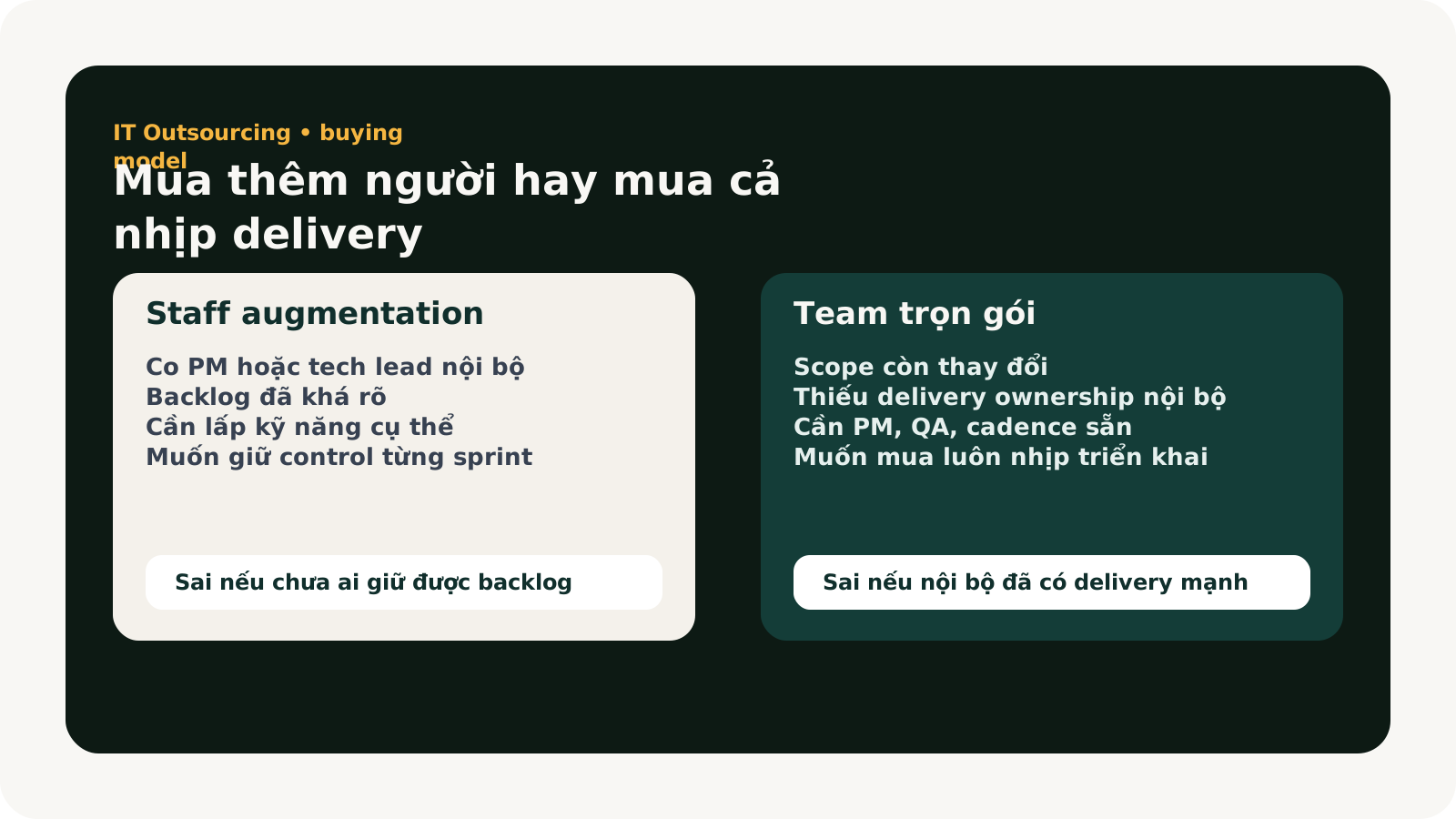

Short answer: If the business already has a real PM, tech lead, and a clear backlog, staff augmentation is often the flexible way to add speed without changing internal ownership. But if the scope is still fuzzy and the team lacks strong delivery leadership, a packaged team is usually safer because the vendor owns coordination, rhythm, and output quality.
Why SMEs often buy the wrong outsourcing model
The most common mistake is not choosing the wrong vendor. It is buying the wrong type of responsibility. Many teams think they only need more developers, so they choose staff augmentation. In reality they may be missing scope control, prioritization, QA discipline, and delivery leadership. More people only make the backlog longer.
The reverse mistake also happens. A company with a clear roadmap and strong internal product leadership buys a full packaged team, adds an unnecessary communication layer, and pays for delivery structure it already has.
The real difference between the two models
| Criteria | Staff augmentation | Packaged team |
|---|---|---|
| Ownership | Internal team keeps delivery ownership | Vendor carries more delivery ownership |
| Scope clarity | Needs a relatively clear backlog | Works better when scope still needs discovery |
| Management load | Internal team manages people and sprint details | Vendor manages capacity, rhythm, and coordination |
| Startup speed | Fast if internal process already works | Faster when the company lacks an operating team |
| Risk under weak internal leadership | High | Lower when the vendor is strong at delivery |
| Control | Higher at the task and person level | Higher at the output level, lower at the micro-management level |
When staff augmentation is the right call
- You already have a strong product owner, PM, or tech lead.
- Your backlog and acceptance criteria are clear enough for fast onboarding.
- You need to fill specific skill gaps.
- You want to keep product direction and release control in-house.
This model works when the company wants extra execution capacity, not outsourced delivery management.
When a packaged team is the safer option
- The project still needs discovery and clearer scope framing.
- The internal team is small and leadership is stretched.
- You need PM, QA, engineering coordination, and release discipline together.
- You are trying to ship an MVP, portal, or internal product on a defined timeline.
For many SMEs, a packaged team is the lower-risk option when the company needs both execution and operating structure.
A practical diagnosis example
If you already run an internal product, your next-quarter backlog is fairly clear, your release cadence is stable, and you only need an extra mobile engineer or QA automation specialist, augmentation is the natural choice. But if you are building a brand-new customer portal, the scope shifts every week, and nobody internally resolves blockers day to day, hiring people one by one turns the founder into an accidental PM. In that case the packaged team is valuable because it brings coordination and rhythm, not only hands.
Many SMEs compare monthly rates and assume augmentation is cheaper. That view ignores coordination cost. If the founder spends six to eight extra hours each week writing specs, clarifying work, rerunning QA, and holding releases together, the apparent savings disappear very quickly.
What a vendor should prove under each model
- For augmentation: onboarding speed, collaboration with the existing team, proactive risk signaling, and clean technical handoff.
- For a packaged team: discovery process, review cadence, QA discipline, change-request handling, and how the vendor protects the timeline when scope changes.
What to lock in the proposal before buying
- Who owns backlog hygiene and who owns release outcome.
- Whether reviews happen weekly or biweekly, and who can approve trade-offs.
- How change requests are handled when scope shifts mid-sprint.
- Where QA, handover, documentation, and incident support sit in the commercial model.
If a proposal only describes headcount and rates without delivery mechanics, the buyer is effectively purchasing a black box.
Read next: Software outsourcing in Vietnam in the AI era · Hiring software developers in Vietnam · How to build an MVP in 8 weeks