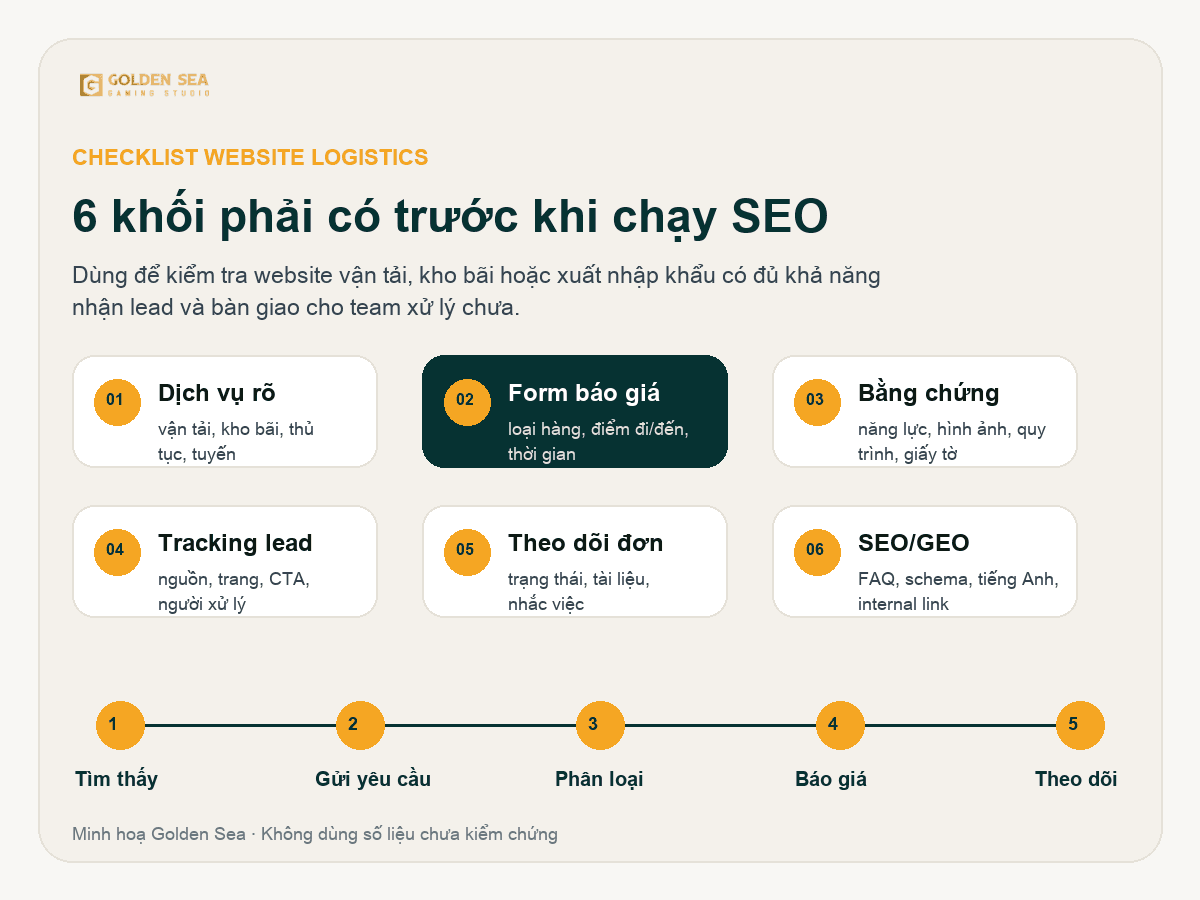
Short answer: A good logistics website should do more than introduce the company. It should help visitors understand the business capability, submit a quote request with enough useful information, know what happens next, and let the operations team track the lead without losing it across inboxes, chat apps, or spreadsheets. For transport, warehousing, import-export, and port-service companies, the website should be designed as an entry point into the sales operation, not just an online company profile.
If a visitor lands on a logistics website and still has to ask, “Which routes do you serve?”, “What information do you need for a quote?”, or “Who is handling my request?”, the website is not doing enough work. A polished interface helps, but without service structure, the right quote form, operational proof, tracking, and follow-up, leads can still disappear the old way: someone asks, the team gets busy, and nobody follows up.
Why logistics websites are harder than ordinary brochure sites
Logistics buyers rarely make a quick emotional purchase. They need to check capability, routes, cargo type, response time, documents, process, and reliability before sending a request. A page with a beautiful hero image, a few generic lines, and a Contact button is usually not enough to reduce buyer risk.
Google recommends useful content, clear business information, understandable headings, and pages that help users complete their goal. For AI Search and answer engines, the same foundation matters, but the content also needs to be extractable: direct answers, comparison tables, FAQs, definitions, and contextual internal links. That means a logistics website should start from the questions buyers actually ask, not from effects or a generic template.
Six blocks a logistics website should include
1. Service pages that match real buying needs
Do not compress everything into one Services page. If the company offers domestic transport, warehousing, customs documentation, freight forwarding, fulfillment, or port services, each priority group should have enough page structure or section depth. Visitors need to know who the service is for, which route or area is covered, what cargo type fits, what needs a separate conversation, and when they should contact the team.
Good copy starts from the buyer's situation: needing transport across provinces, temporary storage before delivery, a container quote, documentation handling, or shipment coordination. This helps both SEO and GEO because search systems can understand the context and human buyers can recognize their own problem.
2. Quote forms that ask enough, not too much
A logistics quote form should collect enough information for the first useful response without becoming so long that visitors abandon it. A minimum set may include name, phone or email, cargo type, origin, destination, expected timing, main need, and notes. If the company has multiple service lines, the form should automatically tag the source page or CTA so the team knows what the visitor was looking at.
The important part is not whether the form looks elegant. The important part is what happens after submission: whether the data reaches the right person, whether notifications are triggered, whether status is tracked, and whether follow-up is scheduled. A logistics website that does not connect the form to operations still leaves leads sitting in an inbox.
3. Operational proof instead of generic promises
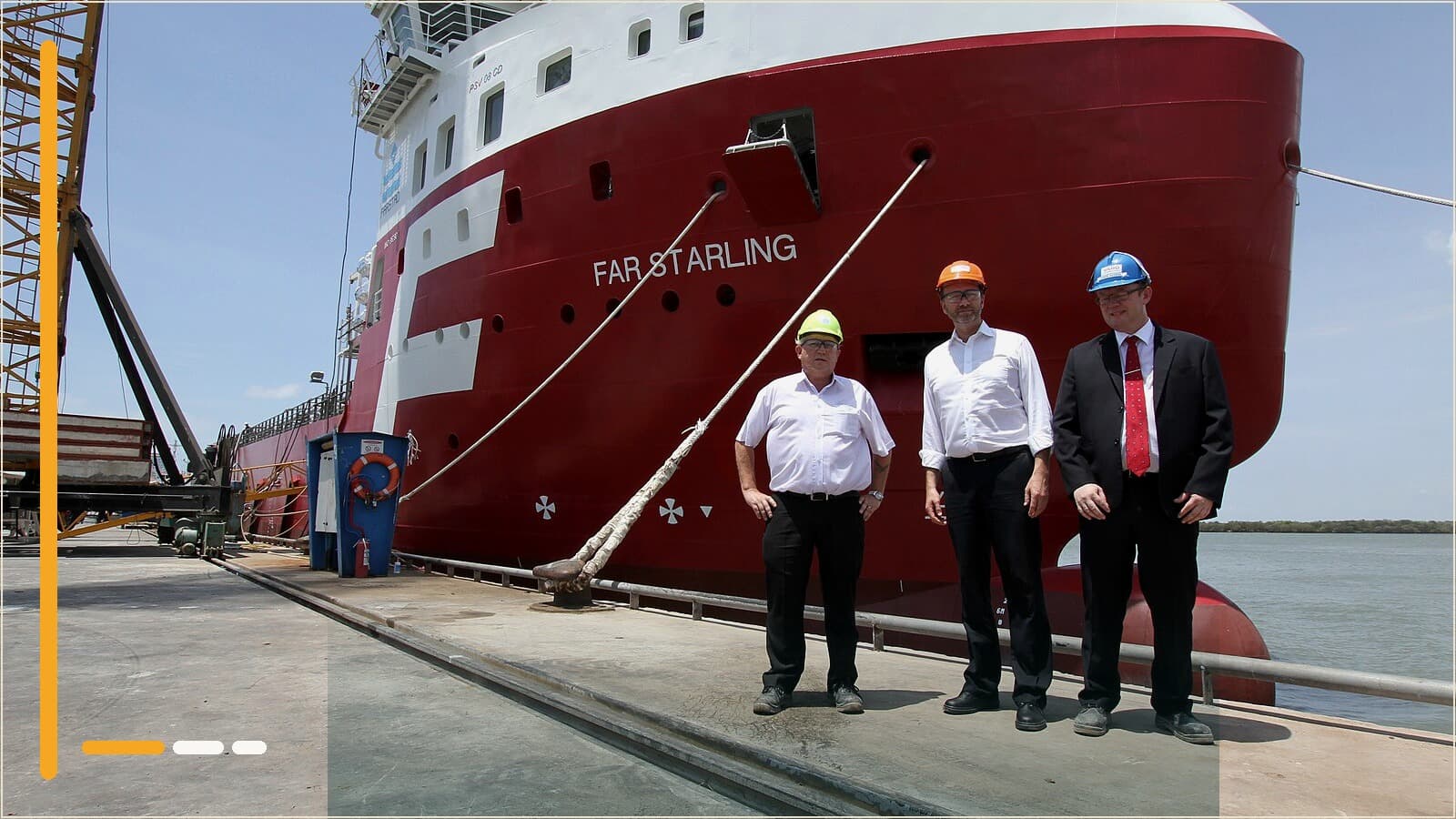
Logistics requires trust. A website should show approved proof: warehouse images, vehicles, operating teams, licenses, request-handling process, delivery checklists, service areas, partners, or case studies that can be disclosed. If client names cannot be published, the company can still describe project type, scope, and process without exposing sensitive details.
Avoid irrelevant stock photos or glossy AI imagery. Logistics buyers usually need to feel that the team is real and operationally capable. They do not need a website that looks like an overseas SaaS startup while showing no local evidence.
4. Lead tracking that shows which pages create opportunities
A logistics website should track essential actions: phone clicks, Zalo or messaging clicks, form submissions, quote-button clicks, capability-profile downloads, map opens, and language switches. When the site has multiple services, every form should store the page source, campaign, and CTA context. Without tracking, the business cannot tell whether leads came from SEO, Facebook, Google Ads, referrals, or a shared article.
Tracking is not just a marketing tool. It helps operations understand which requests are urgent, which require a fast quote, which need additional documents, and who owns the next step. This is what Golden Sea usually checks before discussing automation: the data must be clean enough for automation to be useful.
5. Follow-up flow after the form
Logistics leads rarely close from one message. The team may need to ask for cargo details, weight, route, schedule, paperwork, or delivery timing. The website should open a follow-up flow: new request, checking, quoted, waiting for more information, call scheduled, or closed. For a small team, this can begin in Google Sheets or a lightweight CRM. For a larger team, it can become an internal dashboard.
This is where automation becomes valuable: reminding the owner when a lead is overdue, classifying requests by service type, drafting reply suggestions, syncing records into a CRM, and generating weekly reports. But automation should come after the basic process is clear. Automating a messy process only makes the mess move faster.
6. Bilingual SEO/GEO if international partners matter
Many logistics, import-export, and port-service companies work with international partners. If the website needs English, it should have a dedicated English URL rather than relying only on a JavaScript or cookie language switcher. Sitemap entries, canonical tags, hreflang, schema, and main content should make both language versions visible to Google and AI systems.
For GEO, each service page should include fast answers: what the service is, who it is for, what information is needed, expected response flow, what is outside scope, and common questions. This is still writing for humans, but it also makes the page easier for AI systems to cite accurately.
Recommended structure for a logistics service page
| Content block | Purpose | Question it should answer |
|---|---|---|
| Opening | State service and area | Which routes or cargo types do you serve? |
| Common needs | Match search intent | When does a buyer need this service? |
| Quote information | Reduce back-and-forth | What should the buyer provide? |
| Handling process | Build confidence | What happens after the request is sent? |
| Proof | Reduce perceived risk | What experience, process, or evidence can be shown? |
| FAQ | Capture long-tail SEO/GEO | Cost, timing, documents, areas, and constraints? |
| CTA | Convert into a lead | Quote request, call, message, or consultation? |
Should the company build the website first or automation first?
If the business does not yet have a clear website, quote form, or lead-source tracking, start with the website and technical SEO foundation. If the business already has a website but handles leads through separate chats, spreadsheets, and inboxes, audit the post-form workflow before redesigning the interface. If lead volume already exists but response is slow, follow-up is forgotten, or reporting is manual, automation may create faster impact.
In other words, the website is the entry point, and automation is the pipe behind it. A beautiful entry point with a blocked pipe still loses leads. A good pipe with no demand entering it will not produce revenue either. A good plan considers both, but does not need to build the most complex version of both at once.
Checklist before hiring a logistics website team
- Choose the three to five priority services that should sell first.
- Prepare approved real photos, capability material, or publishable proof.
- Decide what the quote form must ask to support the first response.
- Assign who receives leads, who quotes, who follows up, and what response time is expected.
- Ask suppliers to separate interface, content, technical SEO, tracking, and maintenance in the proposal.
- If English matters, request separate English URLs and verify hreflang in the sitemap.
- If automation is planned, begin with routing, follow-up reminders, and reporting before complex AI features.
Where Golden Sea can help
Golden Sea can start with website design for companies that need a clear, fast, technically sound foundation; or go deeper with AI automation when the issue is lead classification, follow-up reminders, dashboards, and operations reporting. For more complex systems, IT outsourcing fits when the business needs a technical team to build custom software, integrate data, or develop internal dashboards.
The point is not to buy “AI” because it sounds modern. The point is to buy a clearer operating flow: visitors find the business, submit a request, get classified, receive a response, get followed up, and leave data behind for improvement. Once that flow is clear, AI has room to create real efficiency.
Conclusion
A logistics website should not stop at looking professional. It must explain services, collect the right quote data, build trust, measure lead sources, and connect into the handling process. When these foundations are in place, SEO/GEO has clearer information to understand, visitors have more reason to contact the company, and automation behind the website becomes easier to implement.
Read next: AI automation for ports and logistics in Vung Tau, which documents and shift handovers should be automated first, or how to structure a service website so Google, ChatGPT, and AI agents understand the business.