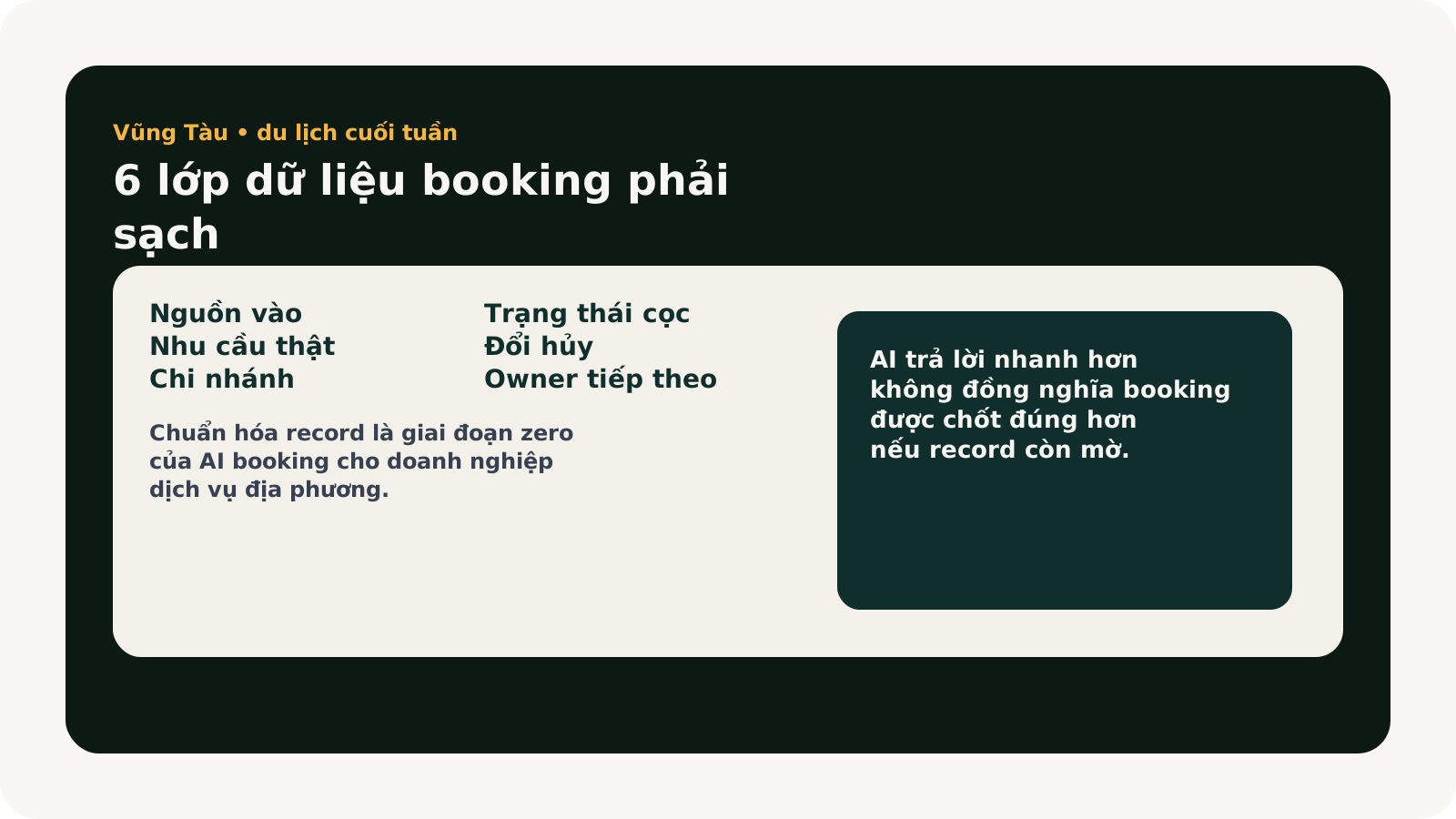

Short answer: For Vung Tau service businesses, booking automation rarely fails at the reply layer first. It fails at the data layer: unclear check-in dates, mixed-up branches, inconsistent service bundles, deposit ambiguity, and policy mismatches. If those six layers are not standardized, AI may answer faster but it will not close more accurately.
Why this deserves a Vung Tau-specific article
Domestic short-stay travel demand remains strong around weekends and holiday windows, which creates bursty booking patterns for Vung Tau and nearby destinations such as Ho Tram. That means booking questions arrive across calls, inbox, forms, OTAs, and messaging channels in compressed time windows.
In that environment, AI should not start as a better-talking bot. It should start from cleaner booking records so that both humans and systems share the same operational truth.
The six data layers to clean first
| Data layer | Minimum required | Failure if missing |
|---|---|---|
| Source | OTA, Zalo, form, call, ad source | No clarity on effective lanes |
| Real need | Service type, dates, party size | The system asks the wrong follow-up |
| Branch / location | Correct facility or site | Guests get routed to the wrong team |
| Deposit state | Pending, paid, tentative hold | Follow-up priority breaks |
| Change / cancellation policy | Current rule by channel or service | The system promises the wrong policy |
| Next owner | Named person or queue for final confirmation | The case falls after the first response |
Where local businesses usually stumble
The biggest problem is merging several service types into one generic booking flow even though their booking logic is different. Homestays, spas, weekend packages, and experience vouchers may all enter the same inbox while requiring different minimum fields and policy handling.
A lower-risk rollout path
First make the six fields mandatory on every booking record. Then let AI handle the lighter lane: acknowledgment, missing-data collection, and owner reminders. Only after the rules are stable should the system move closer to confirmation and policy support in live conversion lanes.
Three signals the booking record is finally clean enough
First, another owner can pick up the record and understand the exact customer state without replaying the whole conversation. Second, when the guest changes plans, the team can update the record without breaking priority or policy handling. Third, deposit and cancellation rules are applied consistently without escalating every familiar case to management.
Only when those signals stabilize does AI have a strong chance to improve conversion instead of merely improving response speed. In weekend-heavy Vung Tau service environments, that distinction matters because the main loss often comes after the first reply, not before it.
How to adapt the checklist by local service type
Even within Vung Tau, spas, homestays, and short-stay experiences should not use the exact same booking checklist. A spa may need time slot, branch, technician, and add-on information. A homestay needs arrival date, party size, room type, deposit state, and cancellation logic. A short experience or tour package may need pickup time, guest count, and confirmation rules.
Standardization does not mean one pretty form for everything. It means defining the minimum fields per service type, then mapping them into a record structure stable enough for owners, SLA logic, and follow-up visibility.
FAQ
Read next: After-hours booking flow audit in Vung Tau · 15-minute missed-call follow-up playbook · Inbox SLA for AI customer service